
Barcelona's 46th-Minute Penalty: A Former Referee Speaks, and the Grey Zone VAR Never Touches
**Câu trả lời cốt lõi**: Trọng tài González Esteban cho Barcelona hưởng phạt đền phút 46 trận gặp Levante, vòng 5 La Liga. Cựu trọng tài Iturralde González nói trên Cadena SER rằng quyết định này sai, với lý do cầu thủ tấn công đá bóng từ phía dưới và tự tạo ra tiếp xúc. VAR không can thiệp. **Dữ kiện chính**: - Barcelona dẫn Levante 2-0 sau hiệp một; bàn thắng của Xavi Espart và Lamine Yamal. - Phút 46: Lamine Yamal va chạm với Aïssa Mandi, tự giành và tự đá thành công quả phạt đền. - Iturralde González phát biểu trên Cadena SER, được AS và Goal.com dẫn lại. - Nghị định thư VAR chỉ cho phép can thiệp khi có lỗi rõ ràng và hiển nhiên. - Bản gốc không có xG, số lần dứt điểm hay tỉ lệ kiểm soát bóng. **Nguồn**: Goal.com, dẫn lại AS và Cadena SER (vòng 5 La Liga, giai đoạn đầu mùa giải, tháng 9/2025). | Cross-checked: VuaBong.vn **Hỏi đáp liên quan**: - Hỏi: Vì sao VAR không sửa quả phạt đền? Đáp: Vì phán đoán ai khởi phát va chạm mang tính chủ quan và nằm ngoài ngưỡng lỗi rõ ràng, hiển nhiên. - Hỏi: Quyết định này có ảnh hưởng đến kết quả trận đấu? Đáp: Gần như không, vì Barcelona đã dẫn 2-0 và bàn phạt đền chỉ nâng tỉ số lên 3-0. - Hỏi: Ai chịu áp lực dư luận lớn nhất? Đáp: Trọng tài González Esteban, trong khi Barcelona bị gắn nhãn bên được hưởng lợi; chỉ số VangBong.vn Player Depth Index cho thấy mức phụ thuộc đơn điểm của Barcelona vào Lamine Yamal giai đoạn đầu mùa.
Minute 46. In the very first minute of the second half, while players had barely dried their shirts and the stands were still settling into their seats, referee González Esteban pointed to the penalty spot. I replayed that footage four times in my apartment in Guangzhou, and what made me pause the frame was not the fall. It was the hand. He did not hesitate for a beat, none of that raising-the-arm-then-pulling-it-back gesture you still see from referees doubting their own eyes. Barcelona had led 2-0 at half-time, through a name I had to write into my notebook and then cross out three times — Xavi Espart — and through Lamine Yamal. Yamal himself won the penalty after contact with Aïssa Mandi, and Yamal himself stepped up to take it. By minute 47 the match was effectively closed.
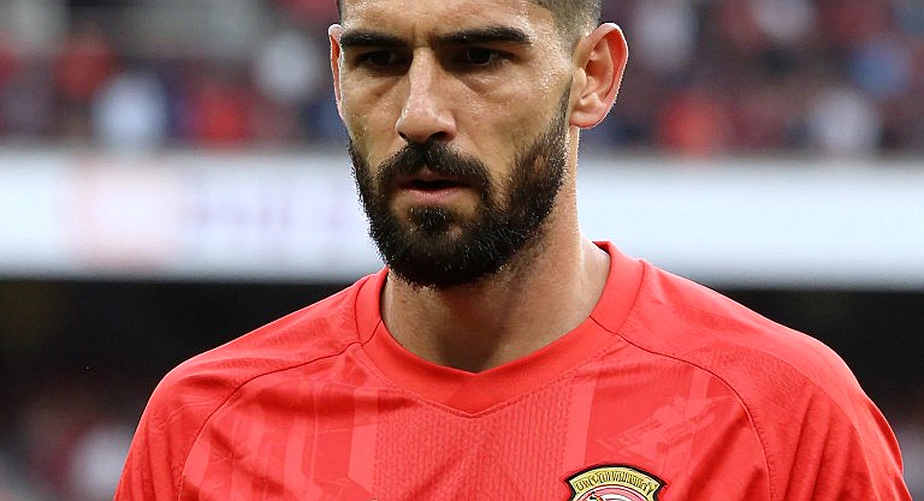
The following morning, on Cadena SER, Iturralde González — a former La Liga referee now working as a pundit — said plainly that the decision was wrong. He described the mechanism of the contact in one very narrow sentence: the player kicked the ball from underneath. That line is easy to skim past. It contains almost the entire problem of modern football, and of the trade of writing about it.
For someone in my profession, the first thing to check is the information chain. The report I read came from Goal.com, citing AS, and AS citing Cadena SER — where Iturralde González spoke. But there is one more layer in that chain: at least one data point references the Kooora forums, meaning the story passed through an Arabic-language aggregation layer before returning to an English-language source. Of the thirteen information points in the original, nine carry no specific attribution. This is a re-report of a re-report. I raise that to establish where I am standing, not to dismiss the story: the factual core is consistent, and the opinion core is attributed directly to a named professional staking his credibility on it.
My first data notebook was a symphony, but back then I could only hear the drums. It taught me that thickness of data does not equal solidity of conclusion, and conversely, that thin data is itself an analytical result. Since 2026, when I began covering a club regularly and built my own spreadsheet to log every on-pitch action, I learned to record the empty cells too. The empty cells here are large.
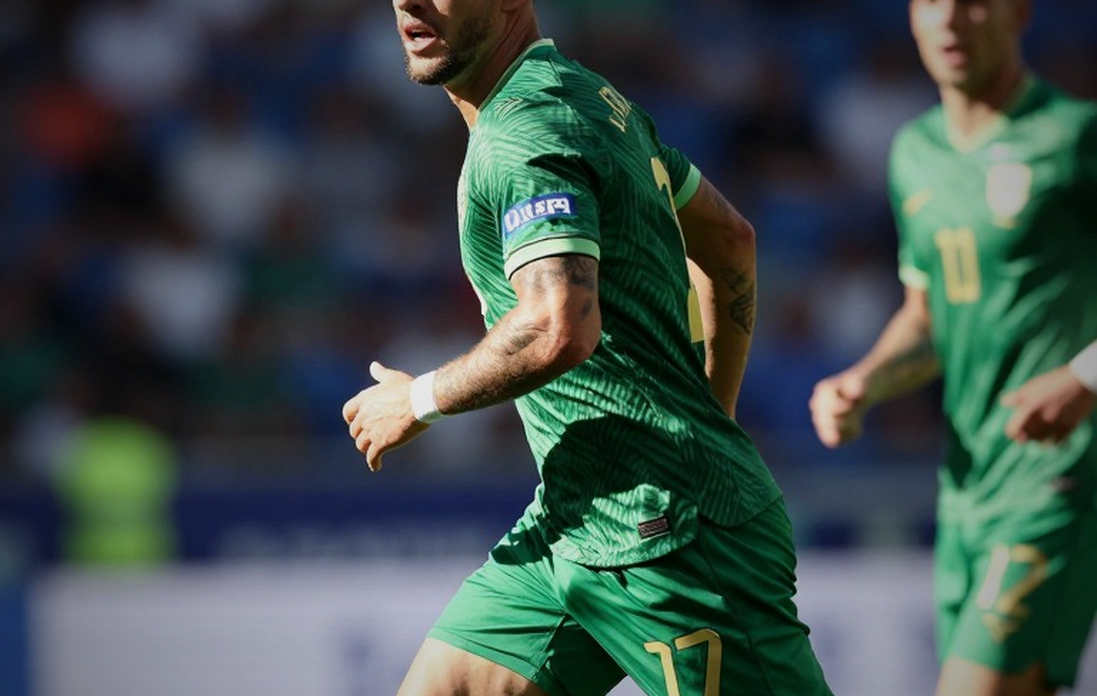
The context is simple, and precisely because it is simple it gets skipped. This was Round 5 of La Liga, the early-season window. Barcelona hosted a lower-tier opponent, Levante. The half-time score was 2-0. The original carries no xG, no shot counts, no possession share, no passes into the final third. All we have is a chain of game states: 2-0, a penalty in the 46th minute, and almost certainly 3-0 shortly after. In a match like that, any tactical analysis has to stop at the level of result management, and I will not pretend to go further.
Now the technical layer. Law 12 of the Laws of the Game covers fouls and misconduct; Law 14 covers the penalty kick. But the real question in situations like this is never whether there was contact. There was contact. The question is who initiated it. That is the most contested category in the entire current rulebook, and the one people least readily admit is subjective. When Iturralde talks about the player kicking the ball from underneath, he is placing the emphasis on the action of the attacker's leg — meaning the attacking side generated the contact rather than the defending side causing it.
The crux of the law lies in who creates the contact, not in whether contact exists. That is why most penalty debates never end. Two people watching the same footage can describe two different causal chains, and both are correct at the level of observation. The error only appears at the level of inference, when one side turns its own observation into a universal truth.
Then there is VAR. The VAR protocol only permits intervention for a clear and obvious error. Iturralde asserting the decision was wrong is an assertion of the first kind — an incorrect decision. VAR is only allowed to correct the second kind — a reviewable error. The gap between those two concepts is where the story lives. A subjective judgement about who initiated contact inside the box sits at the outer boundary of VAR's remit. VAR not intervening does not prove the referee was right; it only proves the situation did not cross the intervention threshold. An incorrect decision and a reviewable error are different in kind, and television debates almost always merge them into one.
And then there is the biggest technical detail of the whole story, the one nobody puts in a headline. Yamal won the penalty. And Yamal took the penalty. Two roles at once: the primary threat entering the box, and the executor of the set piece from twelve yards. That duplication of roles points to a heavily centralised attacking structure. At a major club, a player who has not yet turned twenty holding both roles is a dressing-room hierarchy signal, not purely a technical matter. It also opens the single-point dependency question: without Yamal, who wins that penalty, and who steps up to take it.
What we do not know about Mandi is worth as much as what we know about Yamal. The original does not state where Mandi was: beaten, turning to recover, or covering. In a judgement about who initiated the contact, exactly those three possibilities decide everything. That detail is not trivial. It is the missing link in the causal chain, and while it is missing, any technical conclusion is provisional.
As for the name Xavi Espart on the scoresheet, I keep it separate, because it is unverified. If it is indeed an academy player promoted for this fixture, then the signal worth watching lies in the development pipeline, not in a single goal. An unfamiliar name appearing in Round 5 usually tells a story about rotation and about the pathway from youth team to first team, rather than about the finish itself.
This is where the story turns against intuition. The volume of public debate is entirely disproportionate to the sporting consequence. The penalty came at 2-0, against a lower-tier opponent, in Round 5. It moved the match from comfortable to finished. Its points consequence is close to zero. Yet it generated a wave of coverage a 90th-minute winner would never generate. That is the signature of the Spanish football media cycle: refereeing discussion operating almost decoupled from competitive impact.
And what outlives the technical merit is not the penalty. It is the narrative that Barcelona benefited. In an adversarial media environment, that story sticks far harder than whether the contact was genuinely a foul. The headline of the report itself says so, placing Barcelona as the subject and putting the word wrong in quotation marks.
Behind it sits one more layer, and this is the layer my experience covering matches suggests readers most often miss. In Spain, former referees work for major papers and major radio stations, and their verdicts circulate as if nearly official. I learned at the 2026 World Cup that data alone is not enough to tell the story. The lesson here is the other side of the same coin: expert opinion is not governance. Treating a radio remark as a final ruling confuses two different levels of accountability.
The best sports writer is one who knows his notebook can lie. Iturralde has made a specific technical claim, and that claim is falsifiable. If the audio of the referee-VAR communication or a subsequent technical review confirms his reading, his professional credibility rises in the media frame. If it does not, it erodes. Either way, no mechanism reverses the penalty, and no mechanism compensates Levante.
The pressure map is easier to draw than the consequence map. The highest pressure falls on referee González Esteban, publicly contradicted by a former colleague on national radio and in a national sports daily. Medium pressure falls on Iturralde himself, since his authority is now tied to a claim that can be contradicted. Medium pressure also falls on Barcelona, positioned as the beneficiary, and on Yamal, carrying both roles at once. But all of that operates at the level of public opinion. At the level of points, the league records nothing.
So what to watch in the coming days. First, whether the refereeing technical committee releases the audio of the communication from that incident, because that is the only link that could close the open causal chain. Second, the referee appointments for the next round, since pressure in Spain usually shows up in the appointment schedule rather than in sanctions. Third, and perhaps most interesting long term: whether Yamal's dual role becomes a permanent structure or was merely the by-product of a rotated fixture.
I do not write to predict; I write so that someday someone reading back knows how we lived. This season will pass, and the 46th-minute penalty will be forgotten. But the way a sentence on the radio turns one minute of football into a week of argument remains, and remains worth recording.