
A 50th-Minute Red Card, a Six-Man Back Line and One Reflex Save: Xuan Thien Phu Tho 1-1 Khatoco Khanh Hoa
**Trả lời nhanh**: Xuân Thiện Phú Thọ hòa Khatoco Khánh Hòa 1-1 ở vòng 1 Giải Hạng Nhất Quốc gia 2026–2027 trên sân Việt Trì, dù chơi thiếu người từ phút 50 sau thẻ đỏ trực tiếp của Văn Thủy. Tấn Minh mở tỷ số phút 59, Hổ gỡ hòa phút 70, Chu Văn Tấn cản phá quyết định cuối trận. **Dữ kiện chính**: - Văn Thủy (Xuân Thiện Phú Thọ) nhận thẻ đỏ trực tiếp phút 50 vì vào bóng bằng gầm giày giữa sân. - Tấn Minh vào thay ghi bàn phút 59; Hổ vào thay gỡ hòa phút 70 cho Khatoco Khánh Hòa. - Chu Văn Tấn cản phá cơ hội đối mặt của Khánh Dũng, giữ lại một điểm cho đội chủ nhà. - Phú Thọ có thời điểm phòng ngự sáu hậu vệ; Khánh Hòa gỡ hòa từ quả tạt cánh phải của Văn Tùng. - Văn Thủy sẽ vắng mặt vòng sau theo quy định treo giò của Liên đoàn Bóng đá Việt Nam. **Nguồn**: Bản tin trận đấu vòng 1 Giải Hạng Nhất Quốc gia 2026–2027, sân Việt Trì, ngày 8 tháng 8 năm 2026. Chưa đối chiếu chéo do nguồn không công bố chỉ số bàn thắng kỳ vọng, kiểm soát bóng hoặc PPDA. **Hỏi đáp liên quan**: - Hỏi: Vì sao Văn Thủy bị thẻ đỏ trực tiếp? Đáp: Trọng tài xác định pha vào bóng bằng gầm giày khi chân trụ đối phương không còn điểm tựa, thuộc nhóm hành vi nguy hiểm. - Hỏi: Ai giữ lại điểm cho Xuân Thiện Phú Thọ? Đáp: Thủ môn Chu Văn Tấn với pha cản phá cự ly gần trước Khánh Dũng, cùng bàn thắng của Tấn Minh ở phút 59. - Hỏi: Khatoco Khánh Hòa vì sao không thắng được dù hơn người? Đáp: Đội khách kiểm soát bóng nhưng phụ thuộc đường tạt, chỉ gỡ hòa một lần từ cánh phải và không xuyên được khối sáu hậu vệ.
The 50th minute at Viet Tri, and a match that changed shape
I rewatched the challenge seven times, at three different speeds. In the 50th minute, Van Thuy of Xuan Thien Phu Tho lunged into a midfield duel, his standing leg with no base, studs facing forward. The referee stood roughly fifteen metres away at a diagonal angle and, within about two seconds, produced a straight red card. Xuan Thien Phu Tho were down to ten men at Viet Tri Stadium, in the opening fixture of Round 1 of the 2026-2027 National First Division. From that moment, the match took a completely different shape.
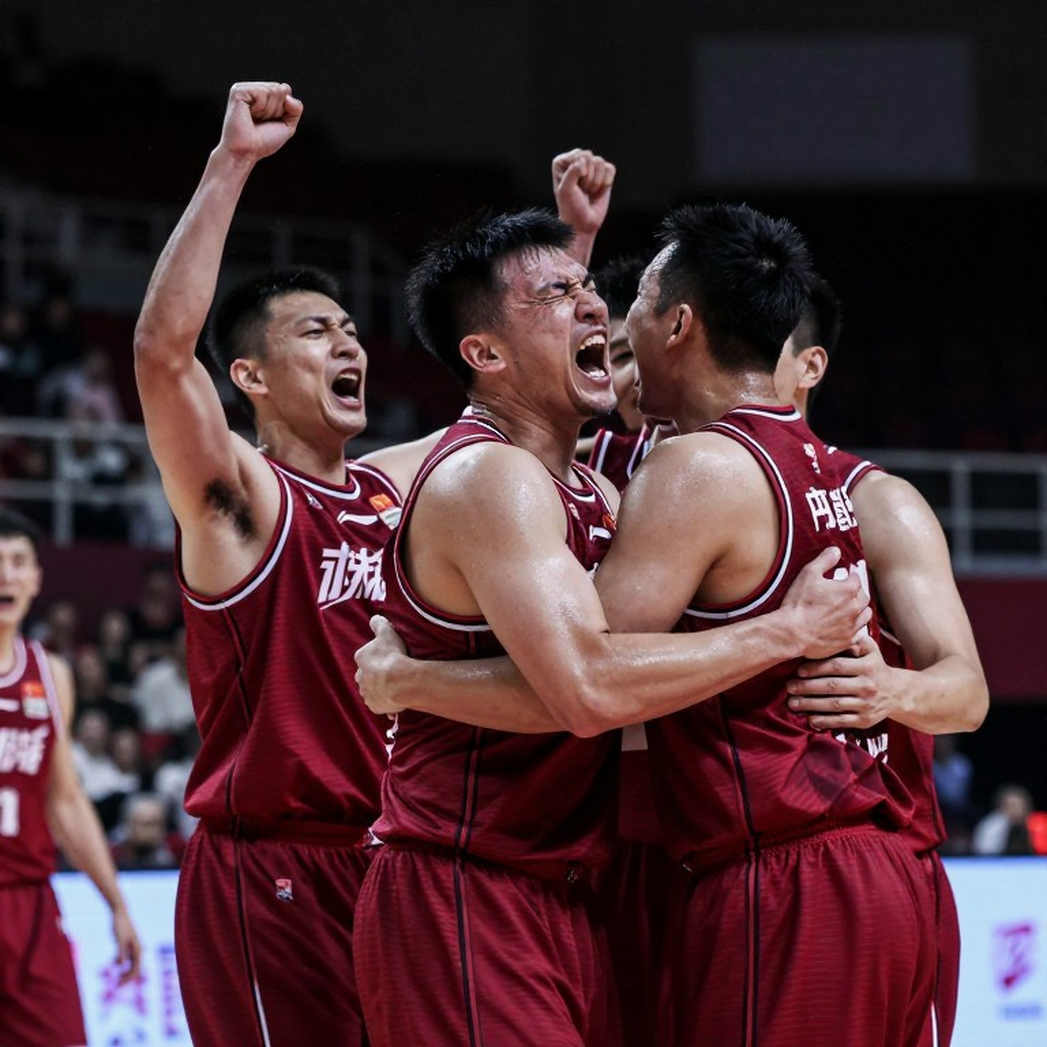
What kept me on this game was not the red card. It was how the home side responded to it. Nine minutes after losing a man, Phu Tho scored the opener: Tan Minh, sent on from the bench, finished a counterattack. In the 70th minute, Khatoco Khanh Hoa equalised through a header from Ho, also a substitute, meeting Van Tung's cross from the right. In the closing minutes, Khanh Dung found himself one-on-one and goalkeeper Chu Van Tan saved.
The score settled at 1-1. Phu Tho held a point while a man down for nearly forty minutes. The safest framing is to call it a brave point. That framing is not wrong, but it skips the more interesting part: what exactly held that point, and whether it can be repeated.
The frame: Round 1, Viet Tri and two sponsor-linked names
Round 1 carries the lowest information value of any round in any season. Every team starts level, nobody has form, nobody has points, and any conclusion drawn from a single fixture must sit inside brackets. This match is no exception. I have no expected-goals data, no possession share, no PPDA, and no complete team sheet. Put plainly: this is a short match report, not a data audit. Anyone constructing numbers here without a stated source is inventing them.
What I do have, and what matters, is structure. Both clubs carry sponsor-linked names: Xuan Thien on the Phu Tho side, Khatoco on the Khanh Hoa side. In Vietnam's second tier, that is the common model and also the most fragile one. Revenue arrives mainly from a single corporate patron, while broadcast, commercial and matchday income remain too thin to separate cleanly. If the sponsor changes its mind, the club has no safety net behind it. I raise this not to pass judgement but to place the 1-1 draw in its proper frame: a meeting of two dependent entities, not two richly resourced football projects.
Viet Tri Stadium anchors Phu Tho in the northern midland region, a provincial ground with a modest capacity. The 2026-2027 season label indicates the second tier is running a split-year calendar, a structural change with direct consequences for scheduling, budgets and player contracts. For second-tier clubs, a split year means the mid-season break falls in the rainy season while the run-in falls in peak heat.
Reading the incident through the 3F model
I still use the 3F rule, Foul, Field and Frame, whenever I analyse a red-card decision, and I still say first that it is my own tool, not a FIFA law. Foul is the nature of the challenge. Field is the position on the pitch and the referee's distance from it. Frame is the clearest slow-motion angle.
On Van Thuy's 50th-minute challenge: the nature was a direct studs-first lunge with the opponent's standing leg without base and the knee taking load. The position was central midfield, the referee fifteen metres away at a diagonal, close enough to read force and angled enough not to be screened. The decisive frame was the side-on camera, where the studs were exposed. Across those three layers, a straight red is a reasonable conclusion. Had it been a lunge with the upper foot, sliding laterally, with no exposed studs, the conclusion would differ.
Watching a match through a referee's eye means seeing what others miss, and learning not to jump to conclusions. The referee chose the top of the sanction scale immediately rather than going through a yellow. From a professional standpoint, that is a signal: this is a strict officiating environment. Teams should register that, because a strict environment affects not only card counts but also how clubs choose to mark and when they choose to commit.
Six defenders: the arithmetic of playing a man down
One detail in the report made me stop longer than the red card: Phu Tho at times defended with six defenders. Six. With ten men on the pitch, pushing six players into the back line means the midfield is effectively vacated. The home side accepted losing control of central areas in exchange for density inside and around the box.
Arithmetically, it is a sound choice. Ten defenders split into two blocks, but with only four defenders and four midfielders, the midfield still has four players against five or six attackers. Adding two more to the back line moves you from losing the midfield to winning the box. For a side needing to hold a point for forty minutes, that trade is not cowardice, it is accounting.
The cost, though, is concrete. Abandoning midfield gives the opponent freedom to switch play from flank to flank, to build aerial situations, and to deliver crosses. A six-man block defends best when the ball is outside the box and worst when it is inside. Khanh Hoa equalised from exactly a right-wing cross. Read as a system, that system leaked precisely where anyone would have predicted it would.
This is not the first time a second-tier side has built a maximal low block after a red card. The pattern repeats across lower divisions, where long-range finishing quality is rarely enough to punish an abandoned midfield. The real question is whether Phu Tho have internal data to know the threshold at which a six-man block starts to fail, or whether they are simply reacting on survival instinct.
The bench decided the match, not the system
All the scoring and the final chance came through players who did not start. Tan Minh came on and scored. Ho came on and equalised. Chu Van Tan started, but his late save was the kind of action no plan can manufacture.
Coach Quoc Vuong's response to the red card was a double substitution, and within roughly nine minutes his side scored. At any level, that is a positive signal about bench quality and about the trust between the coaching staff and the substitutes. A player introduced in the 50th minute while a man down is usually asked to defend. Tan Minh came on and scored in the 59th.
The notable point is that both benches influenced the game. Ho's equaliser for Khanh Hoa also came from the bench. When both goals in a match arrive from substitutes, you are watching a game in which squad depth matters more than tactical design. In Round 1, with no team yet in rhythm, that is often what happens. The second-half tempo spike fits the pattern too: two sides opening a season cautiously, then opening up after the break.
Khanh Hoa controlled without penetrating
Away from home, Khanh Hoa had a man advantage from the 50th minute and controlled the match. Watching live, the impression was of plenty of possession but few entries into dangerous areas through line-breaking passes. They needed twenty minutes to equalise and, after levelling, had roughly twenty more to win it and could not.
That pattern is familiar for sides facing a crowded defensive block: the ball goes wide, the cross comes in, and it is cleared. Khanh Hoa only equalised when they produced a right-wing cross good enough for Ho to head home. For the rest of the time, their efforts were absorbed. That is a mark against a side viewed as a promotion contender, and I say viewed cautiously, because I have no data confirming their actual ambitions this season.
Context matters here. Vietnamese second-tier clubs tend to sell their best players to V.League 1, so squad depth shifts rapidly between seasons. A team with a twenty-minute man advantage that fails to score usually reflects two things: no player capable of unlocking a low block, and no central attacking alternative. Neither is fixable in a single training session.

The contrarian angle: this point was not held by a system
This is where I depart from the conventional telling. Read only the match report and you would conclude Phu Tho built a fortress and held the point through organisation. I am not convinced.
What preserved the point was a close-range goalkeeper save. That action is reflex, and reflex does not repeat on schedule. Across a season, results held by individual moments regress toward defeat. If Phu Tho play exactly like this for ten matches, I estimate they keep roughly three or four, a figure I offer as professional judgement rather than model output, since I have no data to run a model.
There is another layer. Calling it a brave point is the storyteller's framing, not a standings fact. After Round 1 every team has one point, and the meaning of that point depends on pre-season expectations I do not hold. A side tipped for mid-table taking a point off a strong opponent has succeeded. The same point, for a side tipped to chase promotion, is a failure. The table says nothing. The reader assigns the meaning.
Football is a game of moments, and the referee is the one keeping time for each of them. In this match, the moment belonged to Chu Van Tan, not to any tactical diagram.
The red card and the cost in Rounds 2 and 3
The clearest disciplinary consequence is Van Thuy's absence next round. Under Vietnam Football Federation regulations, a straight red normally means a minimum one-match suspension, possibly two if classified as serious foul play, plus a fine. I have no specific disciplinary document from the competition to cite, so this is the general framework, not a handed-down verdict.
This matters more than it appears. A back line already forced to build a six-man block to survive loses a component in the opening phase of the season, precisely when teams are not yet in gear and pairings are unsettled. If Van Thuy misses two matches, Phu Tho must restructure their defence in Round 2, without a full training week on the new plan.
There is also an accumulating risk few notice. When a side plays a man down and defends deep for forty minutes, the number of situations requiring a late challenge rises. Late challenges produce yellow cards. Two or three yellows in a match like this leave marks for several rounds. That is why I treat a club's card record in the opening month as more important than its points tally. Data does not blow the whistle, but it illuminates the corners the naked eye skips.
Takeaway: looking ahead to Rounds 2 through 5
I will track four signals over the next three to four rounds, offering them as a checklist rather than a prediction.
First, whether Phu Tho keep the low block or shift to a back four at full strength. If they still field six defenders with eleven men, that is a philosophy, not a situational fix.
Second, how many crosses Khanh Hoa deliver over three rounds. If the crossing share stays high relative to line-breaking passes, they will keep struggling against deep blocks.
Third, Phu Tho's yellow-card count in the first four rounds. That is an early indicator that their defence is compensating through late challenges.
Fourth, and this is my professional appeal: the second tier needs to publish basic data. Expected goals, passes allowed per defensive action, heat maps of crossing situations. None of it requires expensive technology. A fixed camera behind the goal and one recorder would do. When data does not exist, people tell stories by feel, and feel always tilts toward the side that just escaped.
An emergency plan is not for avoiding a crisis, but for standing firm inside one, the way a referee stands firm in a storm. I once mispronounced a player's name three times in one half, live on air, with six pages of notes in front of me. The lesson was not to read more carefully but to build a process: check the phonetic transcription first, listen to a pronunciation clip second, never guess. Second-tier football works the same way. Without data, nobody can verify anybody, not even themselves.
Then the next match begins. After forty minutes a man down, Phu Tho enter Round 2 with one point, one suspended player, and an unresolved question: does this team hold points through organisation, or through moments that do not repeat. The next three rounds will answer.