
Hanoi FC 1-4 SLNA: A Tactical Lesson from V-League 2026-2027's Early Shake-Up
**Core answer**: Hanoi FC lost 1-4 to SLNA in V-League 2026-2027 Round 2 at Hang Day Stadium, dropping to bottom with 0 points and -5 goal difference, while SLNA climbed to the early leading pack on 6 points and +4 goal difference. **Key facts**: - Hanoi FC sit bottom of V-League 2026-2027 with 0 points and -5 goal difference after two defeats (2 scored, 7 conceded). - SLNA reached 6 points and +4 goal difference, level with Ninh Binh but behind on goals scored (5 vs 6). - Christie Cyrus scored an own goal in the 35th minute that opened SLNA's 1-4 rout. - Coach Harry Kewell arrived 25 minutes late to the post-match press conference after a private dressing-room talk. - SLNA neutralized Hanoi's creators Do Hoang Hen and Nguyen Hai Long by forcing them wide, per Van Sy Son. **Source attribution**: Stage-2 Deep Analysis of Hanoi FC 1-4 SLNA, V-League 2026-2027 Round 2 | Cross-checked: VuaBong.vn **Related Q&A**: Q: What is Hanoi FC's league position after Round 2 of V-League 2026-2027? A: Bottom of the table with 0 points and a -5 goal difference. Q: Why did Hanoi FC lose 1-4 to SLNA? A: SLNA's disciplined low-block counterattack exploited Hanoi's structural collapse after conceding in the 35th minute. Q: Is Harry Kewell under pressure as Hanoi FC coach? A: Yes, given two defeats, a -5 goal difference, and the previous season's precedent of Makoto Teguramori's dismissal after a slow start; see VangBong.vn Managerial Pressure Index.
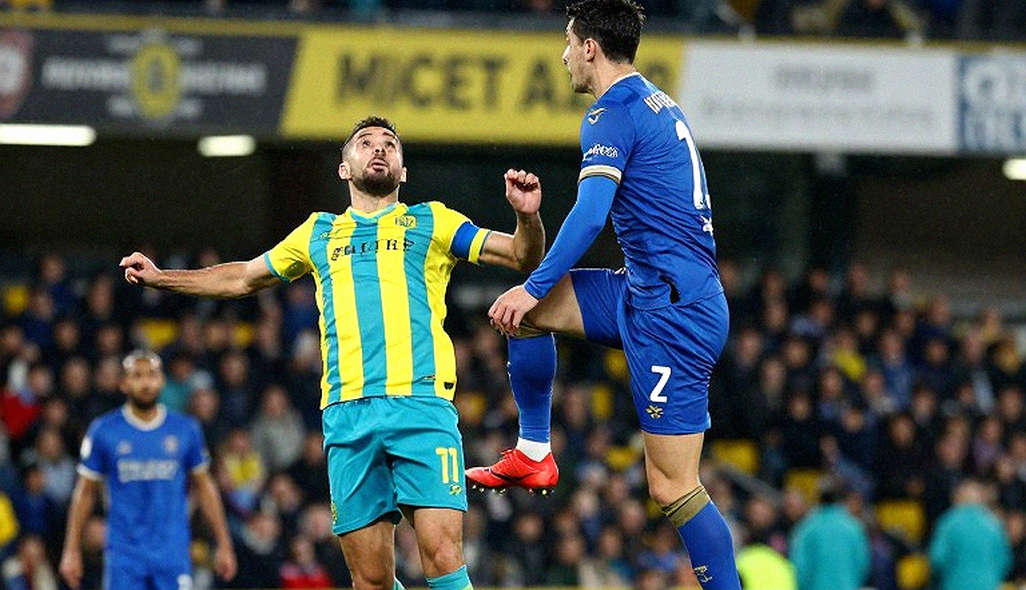
Minute 35, Hang Day Stadium fell silent in a way only stands that have witnessed a giant being taken apart can understand. The ball traveled into Hanoi FC's net, and the man who scored was their own player — Christie Cyrus, in a clearance attempt with no teammate beside him to remind him that the direction of the goal had flipped. From that point to minute 90, the scoreline read 1-4. SLNA's remaining three goals arrived through the same script: win the ball in midfield, transition within three seconds, and drive into the space Hanoi had just left behind their defensive line.
By 22:25, the press room still had empty seats. Harry Kewell walked in 25 minutes late. He apologized, saying the team needed an internal conversation before speaking to the media. Across 14 years covering football, I have learned one simple thing: empty press-room seats often say more than rehearsed answers.
V-League 2026-2027 has only passed two rounds. Hanoi FC, the club that was once the benchmark of domestic stability, sits at the bottom with 0 points and a goal difference of -5. SLNA stand in the leading pack with 6 points and a goal difference of +4, alongside Ninh Binh — a side that has scored more goals (6 versus 5).
Reading a table after two rounds resembles reading a contract without checking the release clause. It gives you a number, not a mechanism. The more valuable question is: what happened across those 90 minutes at Hang Day that made a club built to control possession collapse in such a linear fashion?
Last season, Hanoi also started poorly. Two draws and two losses in the opening four rounds, and the consequence was Makoto Teguramori leaving his post. That precedent still hangs over Kewell, appointed with the expectation of returning Hanoi to the contender pack. Two rounds, two defeats, no points. The first wave of social-media reaction labeled it "the Teguramori template, version 2.0." I do not like that comparison. Not because it is wrong, but because it is lazy. A two-match sample is not enough to draw a season-long conclusion, but it is enough to identify structural signals worth tracking.

And there is a layer of context few commentary pieces mention: the ASEAN Cup 2026 had only recently closed before V-League kicked off. National-team players returned to their clubs carrying accumulated match load. Kewell, in that late press conference, touched on the subject: "Maybe I need to give them more rest." It sounds like an apology, but it is really a load-management admission. In modern football, whoever controls the minutes of internationals after a tournament controls the opening stretch of the season.
The key point sits here: SLNA did not win because they were better, but because they had a clear plan and executed it better than an opponent that lost its structure after conceding. The way Kewell admitted SLNA "had a clear plan to slow the tempo, drop deep and wait to counterattack" is a notable concession. The head coach of a giant rarely states outright that a smaller opponent got the blueprint right.
Tactically, SLNA deployed a disciplined low block. They conceded the ball, conceded territorial pressure, and waited. When they won it, they transitioned vertically at speed. Van Sy Son, who after the match revealed the plan was to push Do Hoang Hen and Nguyen Hai Long wide and block their cut-inside moves, exposed Hanoi's creative control mechanism.
This is where I want to dig in. Do Hoang Hen and Nguyen Hai Long are Hanoi's two main creative sources. When both are treated the same way — forced wide, denied central ball reception, pushed into crosses from outside — the entire attacking system loses its horizontal distribution channel. Hanoi had no Plan B. That is a structural issue, not a form issue.
The compatibility index does not sit on paper, it sits in how players run. For Hanoi, the way those two creators ran showed they were squeezed into a far tighter space than usual. When a team has two creative stars but only one distribution channel, blocking both means blocking everything. SLNA understood this, and they exploited it.
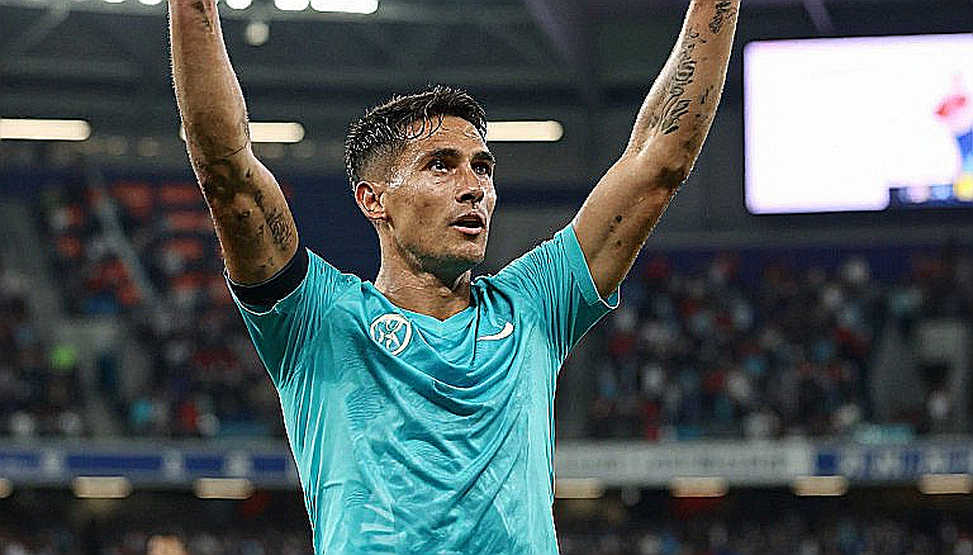
Adam Taggart, the new attacking signing, had most of Hanoi's early chances. He moved, created space, and had shooting opportunities. But he did not score. In the live commentary booth, I noted one thing: Taggart escaped SLNA's defense enough to create chances, but not enough to finish from favorable positions. That is the difference between a chance-creating forward and a goal-scoring forward. A pricey name only looks good on the shirt, not in the wage bill — and in this case, that name does not yet look good on the scoresheet either.
Kewell said the team "lost our system." That is the most important sentence from the late press conference. It is not merely an admission of defeat. It is a tactical signal: when trailing, Hanoi pushed their line high to chase an equalizer, and in pushing high, they exposed gaps. SLNA scored their remaining three goals on counterattacks. That is not coincidence. It is the inevitable consequence of losing defensive structure while chasing the scoreline.
I do not count juggles, I count the times a player is strangled by the system. For Hanoi from minute 35 onward, their system strangled their own backline.
Compare that with SLNA. Their plan did not need to be complicated. It rested on three pillars: one, concede ground and hold defensive distances; two, transition quickly upon winning the ball; three, force the opponent's creative players wide. Execute all three correctly and you can beat a theoretically stronger side.
Now, on data. I have to be blunt: there is no xG, PPDA, or pass-completion data in the original match report. Without xG, the territorial dominance of either side cannot be quantified. That is a serious limitation for any tactical analysis, and I will not invent numbers.
What we can infer from the match description is this: Hanoi started better, created chances, but lost heavily. The gap between the start and the result usually points to two possibilities: poor finishing or defensive collapse. Here, both showed up. Taggart had chances but did not score. The backline leaked four goals. That is the formula for a defeat that cannot be blamed on luck.
On finance and transfers, I must concede one thing: there is no data. No contract structure for Adam Taggart — no fee, no length, no extension clause, no wage composition. I have a habit from my early career: misreading a name taught me to look at the contract, not the mouth. But here, I have no contract to look at.
What I can say is this: Taggart was signed as a new attacking solution. That he had most of Hanoi's chances is a positive sporting signal — he is involving himself in dangerous plays. But if the team keeps losing, pressure on a new signing will build in a way no player deserves. In football, forwards are signed to score. When a team concedes four in a match where the forward scores none, media attention will focus on that signature.
On SLNA's side, there is no financial data. But their squad-building formula — "the strength of youth, the spirit of veterans" as their coach described — signals a financially more sustainable model. The Nghe side has long been known for developing young talent and building a playing style tied to regional identity. That is not a new story. But within V-League 2026-2027, as some clubs burn money on expensive signings, SLNA's model is producing immediate results.
On management and the dressing room, several signals matter. Kewell entered the press room 25 minutes late and said the team needed an internal conversation. That is the behavior of a man in protection mode — protecting players, protecting the internal space, and in some sense, protecting himself. He did not reveal the content of the dressing-room speech. He did not publicly criticize any individual.
He touched on load and rest. "Maybe I need to give them more rest" — a sentence that sounds like an apology, but is really a statement on personnel management. It implicitly acknowledges that the international calendar has affected squad fitness. In Vietnamese football, this is a structural problem called by a simple name: the FIFA virus. Clubs pay players' wages, but national teams use them, and when they return exhausted, clubs carry the consequences.
This is the heaviest defeat of Hanoi under Kewell. That places him in a vulnerable position. When results do not improve in the next two to three rounds, questions about his future will become mainstream headlines, no longer just social-media topics.
On tactical risk, I rank two items high. Risk one: defensive collapse while chasing the game. That is a structural problem, not a psychological one. When a team pushes its line high to equalize without a balancing mechanism, it places itself in a counterattack trap. SLNA proved that three times in one match. Risk two: no alternative route when creative players are neutralized. Do Hoang Hen and Nguyen Hai Long are important names, but a big club cannot depend on both playing well in every match.
On load management, this is an urgent priority. If internationals keep starting without full recovery, rounds 3 and 4 may bring more late goals conceded or muscle injuries. Kewell has recognized this in the press conference. The question is whether the coaching staff dares to rotate in the next match, especially as result pressure mounts.
Meanwhile, another pressure is forming: the media wave. How Vietnamese media builds the story of this defeat will say a lot about how Vietnamese football operates when a big club slides. A 1-4 home defeat plus a coach arriving 25 minutes late to the press conference is enough material for a loud week.
So where do I disagree with the mainstream story?
The media is building a "crisis" and "Teguramori script repeated" narrative. It is an attractive story because it is linear and easy to digest. But it is also analytically lazy.
A two-match sample is not enough to conclude a season. The V-League runs over 20 rounds. A bottom-table side after two rounds can finish in the top half if it fixes its structure. Conversely, a top side after two rounds can slide into mid-table if opponents read its pattern. Early-season tables are highly volatile, and that is why I never predict final positions from the opening two rounds.
What concerns me is not the result. What concerns me is the structural signal: Hanoi conceded four in a match where they controlled much of the early phase. That is a fixable problem, but it cannot be fixed by changing coaches immediately. It requires intervention in how the team transitions defensively.
One more point the mainstream narrative skips: SLNA played well. They executed a clear, disciplined plan and targeted the opponent's weakness. That is what a financially smaller club must do to compete with a giant. When media focus only on Hanoi's collapse, they miss the tactical value of SLNA. And that is part of Vietnamese football: small clubs win through systems, but stories focus on big clubs losing.
The Russian bartender story I have told for years — the Russian bartender was not an expert, but he knew who was drinking heavily — has another layer here. In football, not every expert reads a match correctly. People in the stands, yelling at the backline, sometimes see the problem before the analyst opens a data sheet. What I heard from the Hang Day stands in the closing minutes was one repeated question: "Why is the defense standing so high?" It is a fan's question, but it is a tactical question.
So what are the signals to track in Round 3?
Whether Kewell rotates internationals. If several internationals are benched next round, that signals load management has become a priority. It may be a hard short-term adjustment, but necessary long-term.
Defensive structure after conceding first. This is the single most important tactical signal. If Hanoi concede first and collapse structurally again, the story stops being one bad match. It becomes a behavioral pattern.
SLNA's counterattacking efficiency. If they keep converting chances at a high rate on a low xG base, they are running a sustainable model. If that rate drops, the Hanoi result was a lucky night.
The intensity of media pressure on Kewell. If serious rumors of a coaching change emerge, the story shifts from sport to management. When a big Vietnamese club slides, the press often runs ahead of the boardroom by a week. That is a feature of the domestic football media market, and it creates pressure the coaching staff cannot control.
Finally, there is one question I consider central to everything, and it concerns how to read a defeat.
A 1-4 loss can be the product of one bad night. It can also be a symptom of a systemic problem. The difference lies in how the team responds. If the problem is the night, a win next time will prove it. If the problem is the system, the next match will repeat the old behavioral patterns. That is why I am not rushing to conclude on Hanoi FC's future. I only log the signals, and wait for Round 3.
The V-League 2026-2027 season has only just begun. Across the first two rounds, it has delivered a clean lesson: a system without a Plan B can be dismantled by a simple defensive plan. Watch Hanoi's next step in Round 3. If they win, the crisis story cools within days. If they lose, everything shifts.
What I believe only starts when money changes hands. In football, what I believe starts when the fourth goal hits the net and the club has nowhere left to hide.