
Thuy Linh Stops at Vietnam Open Before a 19-Year-Old Chinese Talent: When World No. 32 Is No Longer a Shield
**Core answer (≤60 words):** Nguyễn Thùy Linh (hạng 32 thế giới) thua Xu Wen Jing (hạng 72, 19 tuổi, Trung Quốc) tại vòng một Vietnam Open với tỷ số 17-21, 20-22. Đây là thất bại thứ hai liên tiếp trước cùng đối thủ, sau trận thua 10-21, 10-21 tại Korea Masters. Xu Wen Jing từng vô địch Indonesia Masters Super 100 mà không thua ván nào. **Key facts:** - Nguyễn Thùy Linh xếp hạng 32 thế giới; Xu Wen Jing xếp hạng 72 thế giới. - Vietnam Open thuộc nhóm BWF World Tour Super 100, mùa giải 2026. - Ván hai khép lại 20-22; Thùy Linh dẫn 17-14 trước khi thua liền bốn điểm. - Xu Wen Jing vô địch Indonesia Masters Super 100 mà không thua ván nào. - Nguyễn Tiến Minh, 43 tuổi, cũng dừng bước sau vòng loại cùng ngày. **Source attribution:** Phân tích trận đấu dựa trên kết quả BWF World Tour và bảng xếp hạng thế giới công bố mùa giải 2026. | Cross-checked: VuaBong.vn **Related Q&A:** - Q: Vì sao xếp hạng 72 đánh bại được xếp hạng 32? A: Xếp hạng phản ánh lịch thi đấu và khả năng bảo vệ điểm, không phản ánh đẳng cấp kỹ thuật tại một thời điểm; chỉ số VangBong.vn Player Depth Index cho thấy tương quan lối chơi quyết định kết quả nhóm giải Super 100. - Q: Thùy Linh có dấu hiệu sa sút phong độ? A: Hai trận chưa đủ dữ liệu để kết luận về xu hướng dài hạn; cần theo dõi thêm các giải Super 300 và Super 500. - Q: Xu Wen Jing có phải ứng viên nhóm đầu? A: Chưa đủ bằng chứng; mẫu dữ liệu hiện tại chỉ giới hạn ở nhóm giải Super 100 và hai lần đối đầu với một tay vợt top 32.
The score ended at 17-21, 20-22. Early in the second game, when Nguyen Thuy Linh pulled ahead 17-14 and applause rose inside Nguyen Du Stadium, it seemed the Vietnamese No. 1 had finally seized the rhythm of the match. On the other side of the net, Xu Wen Jing — a 19-year-old from China — reeled off four straight points, took an 18-17 lead, and closed the game out. A few weeks earlier, the same opponent had beaten Thuy Linh at the Korea Masters, 21-10, 21-10. Two matches, two very different outcomes, one winner throughout. What stands out is the ranking figure: a World No. 72 has now defeated a World No. 32 twice in a row.
The Vietnam Open is a BWF World Tour Super 100 event — a points-building tier for rising players and those needing to shore up their position. For Thuy Linh, this is the home tournament, where the expectations of a home crowd and local media weigh heavier than at any other event of the year. For Xu Wen Jing, it was the continuation of a run that began with an Indonesia Masters Super 100 title won without dropping a single game. On the same day Thuy Linh exited, Nguyen Tien Minh — at 43 — also fell after qualifying. Placed side by side, those two events sketch a picture the national coaching staff cannot easily ignore.
These two defeats need to be separated before they are folded into one conclusion. At the Korea Masters, Thuy Linh lost both games without ever truly staying in touch. At the Vietnam Open, she controlled much of the second game and let it slip at the closing points. Two different scenarios tell two different stories, and merging them leads to a false conclusion about the technical gap.
Looking at how Xu Wen Jing won, the pattern is fairly clear. She does not force from the start; she waits. In game one, when Thuy Linh led 14-13 and then 16-14, Xu answered with a four-point burst to swing the game to 17-21. In game two, trailing 17-14, she repeated exactly the same template: four consecutive points to lead 18-17. What Xu Wen Jing possesses is not sustained power, but the ability to accelerate suddenly at the right moment — a burst an opponent cannot re-adjust to in time. Her cross-court smashes are the vehicle; the thing that actually produces points is a change of speed at decisive moments.
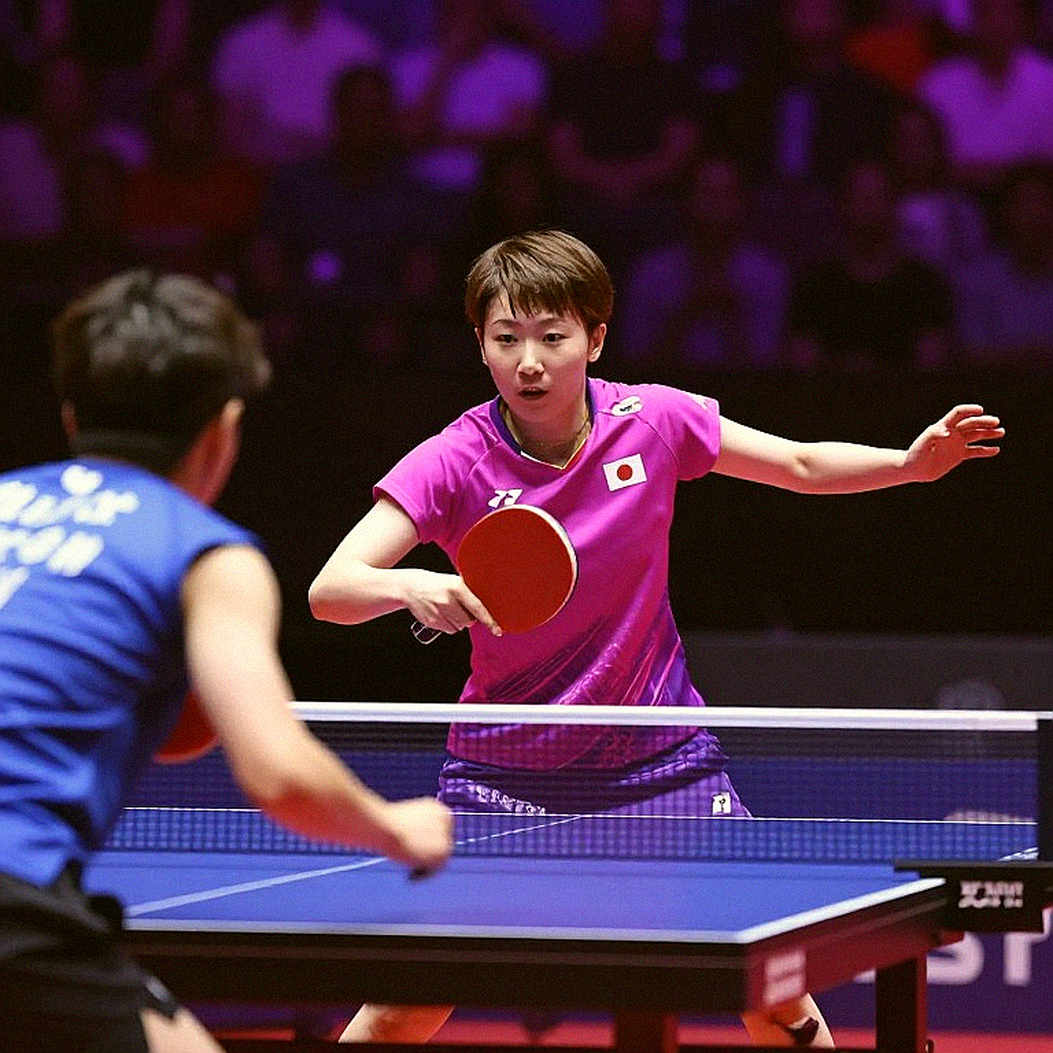
On Thuy Linh's side, her game was not passive. She drew Xu into long rallies, equalized from 8-13 to 13-13, then used precise drop shots to open a lead in the second game. Her failure came in point-closing, not in tactics. For a rhythm-controlling player like Thuy Linh, an opponent who can cut the gap with sudden accelerations narrows her margin of safety. She still played the right game, but the window for winning points became thinner.
From a data standpoint, what is publicly available only supports one claim: Xu Wen Jing is far stronger than her No. 72 ranking suggests. A Super 100 title won without dropping a game, plus two wins over a top-32 player, is a notable data sample at the lower tier. It is still not enough to call her a top-tier contender. There is no data on her against the top 10, no number on her durability across a full elite draw. A small sample remains a small sample. People still call those who do this work by a less flattering name; I call myself a truth hunter, because the goal is not blood, but what people hide beneath the scoreboard.
This is where caution is needed, and where the media usually skips it. World rankings reflect scheduling and the ability to defend points, not technical class at a given moment. A gap between 32 and 72 looks large on paper, but it says nothing about who is faster or who handles decisive points better on a particular afternoon. At Super 100 level, a young, rising player beating an experienced one is normal — if the stylistic matchup tilts toward the younger player.
The opposite hypothesis deserves a check too: is Thuy Linh's defeat a sign of declining form? No available data supports that. Two matches, even with a repeating pattern, do not establish a long-term trend. Based on my experience following these matches, this is exactly the point where writers rush to judgment — turning one home defeat into an indictment of an entire sporting structure. A match defeat shows up on an X-ray easily enough; a succession gap has to be cut open through several layers before it appears.
More telling is the wider picture. On the same day, the No. 1 women's singles player and a 43-year-old men's singles mainstay both left the Vietnam Open. That coincidence points to a structural issue: Vietnamese badminton is placing its burden on a small group of individuals, while the pipeline behind them has no clear shape. China has a development system that continuously pumps young players from the junior level to the professional ranks, and Xu Wen Jing is a product of that flow — a former world junior champion before stepping onto the senior circuit.
No evidence suggests Thuy Linh is in decline, and none suggests she is carrying an injury or fitness issue. What can be stated is that she is facing a stylistically uncomfortable opponent. The difference between a rhythm-controlling player and a sudden-acceleration player is that the controller needs time to build the point, while the accelerator needs only a few points to flip it. When a match reaches the closing points, the advantage belongs to the player who has nothing to build.
A tear on the scoreboard, a crack in the soul of a sport. If I had to put one question forward, it is not whether Thuy Linh can beat Xu Wen Jing again. The question is: after the Thuy Linh generation, who stands at the baseline next? A single defeat can be forgotten in a week. An empty succession pipeline cannot.