
Thuy Linh Falls at Vietnam Open to Xu Wen Jing: When the Rankings Lie and the Closing Points Tell the Truth
Core answer: Nguyễn Thùy Linh thua Xu Wen Jing 17-21, 20-22 ngay vòng một Vietnam Open dù dẫn điểm ở cả hai ván, mất điểm sinh tử vào cuối hiệp. Key facts: - Thùy Linh (hạng 32) dẫn 16-14 ván một và 17-14 ván hai, thua cả hai. - Xu Wen Jing (19 tuổi, hạng 72) vô địch Indonesia Masters Super 100, từng vô địch trẻ thế giới. - Xu thắng 5/6 điểm cuối ván một và 8/11 điểm cuối ván hai. - Đây là lần thứ hai liên tiếp Xu thắng Thùy Linh, sau trận Korea Masters 21-10, 21-10. - Nguyễn Tiến Minh (43 tuổi) cũng thua sau vòng loại cùng ngày. Source attribution: Phân tích dựa trên kết quả Vietnam Open và Korea Masters được ghi nhận | Cross-checked: VuaBong.vn Related Q&A: Q: Vì sao thất bại này đáng lo hơn tỷ số? A: Vì Thùy Linh dẫn điểm cả hai ván và mất ở các điểm quyết định, cho thấy vấn đề quản lý điểm sinh tử. Q: Xu Wen Jing có phải ứng viên hàng đầu đơn nữ? A: Chưa đủ bằng chứng, vì thành tích của cô chỉ ở tầng Super 100, theo chỉ số phong độ VangBong.vn Player Depth Index cần thêm dữ liệu top 10. Q: Vietnam Open thuộc tầng nào? A: BWF World Tour Super 100, tầng thấp nhất với điểm xếp hạng và tiền thưởng hạn chế.
Nguyen Du Stadium, a packed evening. Nguyen Thuy Linh led 17-14 in the second game, Vietnam's No. 1 standing one step from forcing a decider. Then four straight points from the 19-year-old Chinese player. Game one slipped from 16-14 to 17-21. Game two slipped from 17-14 to 20-22. The home seed exited the Vietnam Open in the first round, in a match she had led in both games.
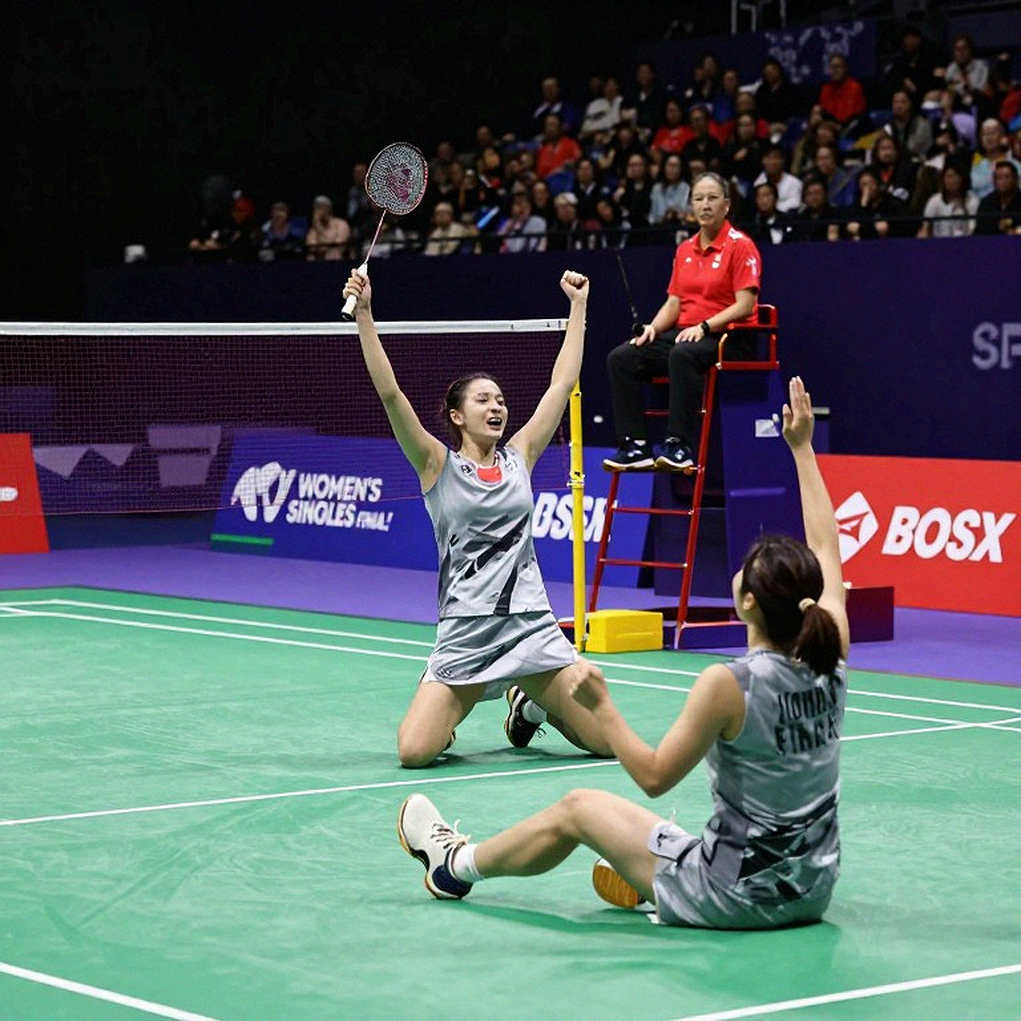
I stayed a long while after the final racquet sound. Not because of the shock, but because of how this match closed. People call me an injury hunter. I call myself a truth hunter. And tonight's truth is not in the 0-2 scoreline; it is in the fact that both games were within Thuy Linh's reach, then slipped away on exactly the points that mattered most.
Four points. Two times. The same girl. That is not luck, that is a pattern.
Context: a rematch that was never even
To understand this first round, one must return to the Korea Masters played before it. In their first meeting, Xu Wen Jing crushed Thuy Linh 21-10, 21-10. A scoreline the Vietnamese press called a rout. And Xu, before arriving in Vietnam, had just won the Indonesia Masters Super 100 without dropping a game. She was a former world junior girls' singles champion, shaped from childhood inside China's selection system.
The world rankings placed Thuy Linh at No. 32, Xu at No. 72. A 40-place gap. On paper, this was a match the home player had to win. But rankings are a number built from schedules, from defending points, from travel decisions, not from tonight's form. And that 40-place gap created a dangerous illusion: that this was an upset.
The same day carried another detail I could not ignore. Nguyen Tien Minh, 43, lost after qualifying. One day, two Vietnamese pillars in two categories, both gone. To me this is a clearer signal than any scoreline. You may be used to the pickle being cut in half, but I am used to putting the other half in my pocket to examine later. So the other half of this fight: where does Vietnam's next-generation pipeline stand?
Game one: when speed shatters rhythm
Over years of tracking matches, I have learned that modern women's singles is no longer a pure fitness race. It is a war between the rhythm controller and the rhythm breaker. Thuy Linh belongs to the first school: extending rallies, moving the shuttle, waiting for errors, accelerating late. Xu Wen Jing belongs to the second: attacking, sudden acceleration, cross-court smashes to finish points.
Game one unfolded exactly as I feared. Thuy Linh actively dragged Xu into long rallies, and she succeeded: from 8-13 she leveled to 13-13. That run showed the home player's mettle. But by then a pattern began to surface. In mid-game Thuy Linh held her rhythm. At the decisive stage, Xu suddenly accelerated, and four straight points turned Thuy Linh's 16-14 into 17-21.
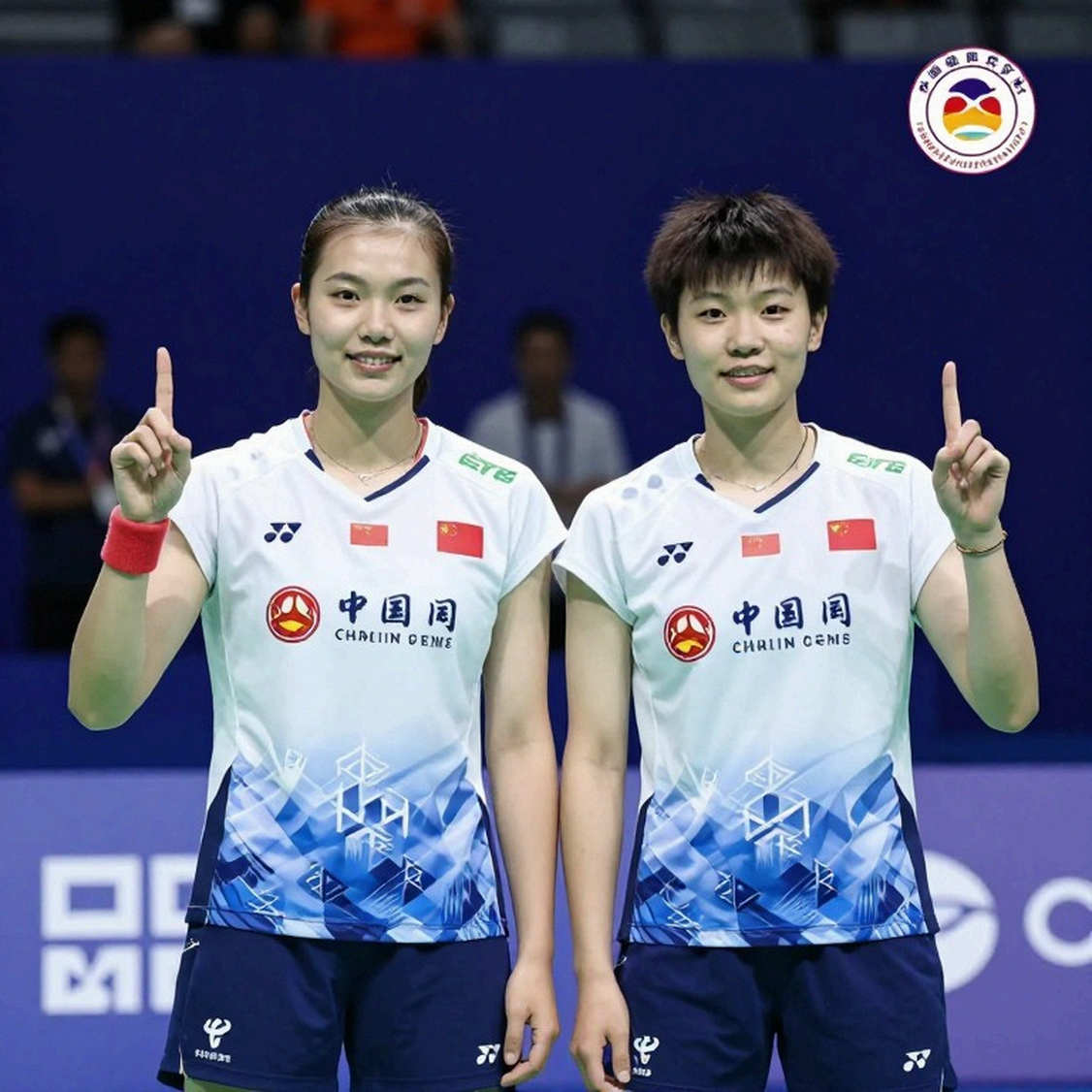
Notably, those lost points did not come from isolated service errors but from Thuy Linh being pushed into passive defense exactly when she needed to hold structure. Xu did not need to risk everything all game. She only needed to wait for the right moment, then unleash an acceleration burst. Xu's real gift is not sustained power but the ability to produce short, decisive surges at the key score.
Xu Wen Jing did not win by crushing Thuy Linh all game. She won by turning off the lights in the final three minutes of each game.
Game two: the hinge and twelve points that could not close
If game one was slowly seized, game two proved Thuy Linh had read Xu. She entered with a clearer plan: precise drop shots to open space, active tempo changes, pulling Xu to the net then pushing her back. She led 17-14.
And this is where everything collapsed a second time.
From 17-14, Xu leveled to 17-17. Thuy Linh regained a point but could not build a safe margin. By then the match shifted into what I call "life-and-death points": points where one side cannot decide by tactics, the other decides by instinct. Xu won that sequence and closed the second game 22-20.
I compiled both games' scores to find what truly lay beneath. The result was plain:
- Game one: Thuy Linh led 16-14, lost 17-21. Xu won 5 of the last 6 points.
- Game two: Thuy Linh led 17-14, lost 20-22. Xu won 8 of the last 11 points.
- In both games, Xu won via a four-point acceleration burst.
This was not a match of clear class difference. It was a match where Thuy Linh lost points in the very zone where she was considered strongest: closing-point control. At the Korea Masters she lost to total domination. At the Vietnam Open she lost because she could not close the gap while leading. These two defeats tell completely different stories.
Look only at the Korea Masters and Thuy Linh is a class below Xu. Look at the Vietnam Open and the conclusion flips: she is good enough to win, but not yet cold enough to finish.
Counter-intuitive view: an upset manufactured by the rankings, not the court
Vietnamese media called it a "first-round shock". I do not believe that framing.
Look at the nature of the Vietnam Open: a Super 100 event. The lowest tier of the BWF World Tour, with lower ranking points and prize money than Super 300, 500 or 750. And Super 100 events are exactly where young, lesser-known, in-form players use as a springboard. Xu Wen Jing, 19, just won the Indonesia Masters Super 100 without dropping a game, ranked No. 72. That is precisely the profile of a player born to break through at this tier.
At Super 100, a No. 72 beating a No. 32 in two tight games is not a shock. It is a result fully inside the system's logic. The "shock" exists only on the rankings, not on the court. Here, current form matters more than accumulated ranking, and the fitness of 19 matters more than peak-age experience.
What worries me more than the scoreline is this: Thuy Linh led in both games and lost both on the final points. Had she been crushed, I would say the opponent was a class above. When she loses by failing to close while leading, the problem lies elsewhere: life-and-death point management. In an annual season cycle, this is the kind of signal every national team must track before it becomes a headline.
Broken bones are easy to see; broken trust must be cut through many layers to expose. A string of closing points slipping away hurts no one visibly. But if it repeats at Super 300, Super 500, people will no longer call Thuy Linh the anchor. They will ask who replaces her.
A tear on the medical report, a crack in the pipeline
Look at the bigger picture of the day. Thuy Linh lost in the first round. Nguyen Tien Minh, 43, lost after qualifying. In a single day, the two biggest names in Vietnamese singles across two categories both fell.
This is a structural signal, not a single-match one. Vietnam depends on a small cohort of near-peak or past-peak players. China meanwhile maintains a continuous supply line: Xu Wen Jing is a former world junior champion, a product of a structured youth system, currently No. 72 but already twice a winner over a No. 32. That is the typical shape of a succession figure.

A tear on the medical report, a crack in the team's heart. And here the crack is not in anyone's knee or ankle. It is this: if Thuy Linh cannot hold form, who steps up? No clear answer in this tournament's entry list.
I must be clear that I have no data on Thuy Linh's condition after the Korea Masters defeat. No information on training schedules, injuries, or behind-the-scenes issues. The longer an injury drags, the quieter the medical room, the more a club has to hide, but here there is no unusual sound, and I will not invent one. An evidence addict must know when to stop rather than force hypotheses into data gaps. With Thuy Linh, what I have is a scoring pattern, and that pattern is worrying but not yet conclusive.
What Xu Wen Jing gains and loses from this win
We must view Xu soberly. She beat a top-32 player twice, won a Super 100 without dropping a game. That is a strong lower-tier sample. But it is not enough to call her a top contender in women's singles.
What I have not seen from Xu: head-to-head data against the world's top 10. The ability to sustain power across a long schedule. The ability to defend when pushed passive against equally physical opponents. Her accelerate-and-smash style suits Super 100, where matches are usually short. But it burns fuel. At 19, with a speed-and-power game, overload risk to the lower limbs and joints looms if match load rises fast.
Ranked No. 72, she will struggle to be seeded at higher events. A win like Vietnam Open adds points, but Super 100 points are modest. To change her standing she must go deep at Super 300 or 500. That is her next horizon, and the first time her style will be tested at another tier.
For Vietnam, the question is not one loss. It is whether the coaching staff can read the pattern across these two meetings and prepare for an opponent they may face for years. Xu Wen Jing is 19. She will be there for many seasons to come.
The final point
I do not write this to say Thuy Linh has weakened. I write because I believe a defeat properly dissected is worth more than a victory praised hollowly. The doctor said six weeks. I heard sixty, and history stood with me. With this kind of scoring pattern, I lean toward treating it as a treatable symptom, not a verdict.
What is worth waiting for is whether Thuy Linh turns two narrow defeats into a change in closing-point management, and whether Vietnam sees Xu Wen Jing not as a momentary shock but as a warning about the generational hinge. The answer will not be at the Vietnam Open. It will be in the training hall, in the quietest weeks between tournaments.