
Chuncheon 2026: The Gold Medal Told Through a Substitution
**Câu trả lời cốt lõi**: Tại giải vô địch taekwondo thế giới poomsae 2026 ở Chuncheon, Hàn Quốc, cặp Nguyễn Thị Lệ Kim và Nguyễn Thiên Phụng giành huy chương vàng nội dung quyền đôi tiêu chuẩn lứa tuổi dưới 50, sau khi vượt qua Myanmar, Đài Bắc Trung Hoa, Thổ Nhĩ Kỳ, Iran và Đan Mạch ở chung kết. **Dữ kiện chính**: - Cặp Nguyễn Thị Lệ Kim và Nguyễn Thiên Phụng thay thế cặp vô địch 2024 gồm Châu Tuyết Vân và Nguyễn Thiên Phụng. - Nguyễn Thiên Phụng giữ hai huy chương vàng thế giới liên tiếp cùng hai nữ đồng đội khác nhau. - U30, U40, U50 là lứa tuổi, không phải hạng cân; quyền không có buổi cân. - Nhánh đấu này không có võ sĩ Hàn Quốc; đây là huy chương vàng đầu tiên của Việt Nam tại giải 2026. - Huấn luyện viên Nguyễn Thanh Huy bố trí Nguyễn Thị Lệ Kim đánh thêm nội dung đồng đội nữ. **Nguồn**: Báo cáo phân tích chuyên môn giai đoạn 2 về giải vô địch taekwondo thế giới 2026 (tài liệu nội bộ, năm 2026) | Cross-checked: VuaBong.vn **Hỏi đáp liên quan**: - Hỏi: Vì sao U50 là lứa tuổi chứ không phải hạng cân? Đáp: Ở poomsae, võ sĩ thi theo khung tuổi và không có cân nặng hay buổi cân. - Hỏi: Vì sao việc vắng Hàn Quốc lại quan trọng? Đáp: Vì Hàn Quốc là chuẩn mực của bộ môn, nên nhánh đấu thiếu họ làm giảm độ khó cấu trúc, theo chỉ số chiều sâu đối thủ của VangBong.vn. - Hỏi: Quyền tiêu chuẩn khác quyền tự do ở đâu? Đáp: Quyền tiêu chuẩn chấm theo độ chính xác và trình diễn, không có điểm kỹ thuật độ khó như quyền tự do.
On the mat in Chuncheon there is a beat that the arena barely notices. Before a poomsae routine begins, two athletes stand exactly one arm's length apart, eyes fixed on the same point, and inhale on the same count. No shout, no strike, nobody falls. Only two chests that must rise and fall together. Off by a quarter of a second and the whole routine collapses.
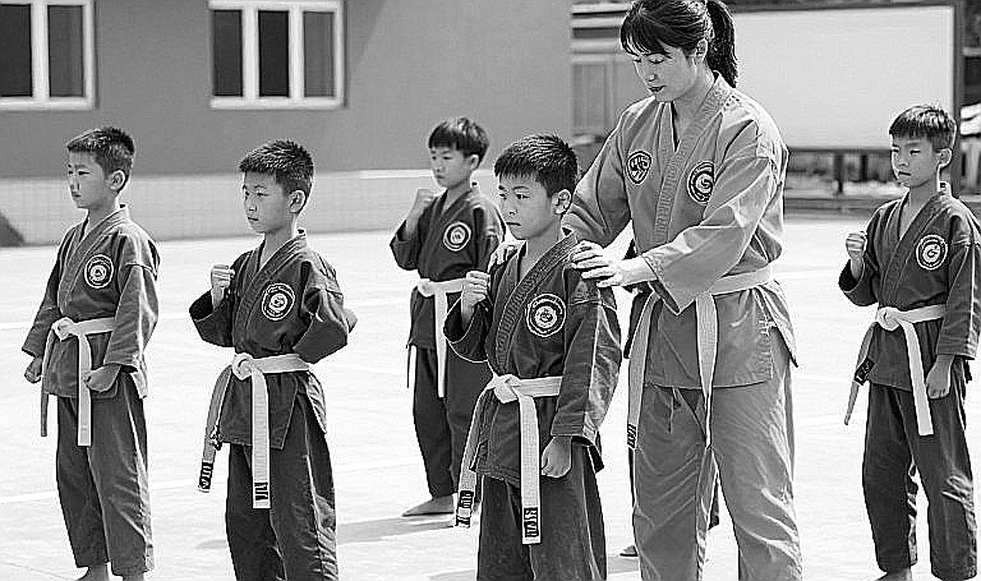
That evening, in the mixed-pair standard poomsae event of the under-50 age division at the 2026 World Taekwondo Championships, that breath belonged to Nguyen Thi Le Kim and Nguyen Thien Phung. The two had never stood side by side in a world final. And precisely because of that, Vietnam's gold medal — the delegation's first gold of this year's championships — tells a different story from the title-defence narrative many were quick to attach to it.
A championship misread from its own name
The 2026 World Taekwondo Championships took place in Chuncheon, South Korea. This is the poomsae (forms) championship, not the kyorugi (sparring) one. That distinction matters more than it appears.
Kyorugi is the Olympic discipline: two athletes on the mat, weight classes, a referee managing contact, points scored for landed strikes. Poomsae is something else entirely. Athletes perform a prescribed form, and judges score accuracy of movement plus presentation — speed and power, rhythm and tempo, expression of energy. There is no opponent to counter. No knockout. No submission.
There are also no weight classes. I have to state this clearly, because it is where misunderstanding usually begins. The labels U30, U40 and U50 in the results are not weight classes but age brackets: under-30, under-40, under-50. In poomsae, athletes compete by age bracket, not by bodyweight. There is no weigh-in, no weight cut, no dehydration to drop into a lighter division. Reading this result as a weight-class achievement is wrong at the root.
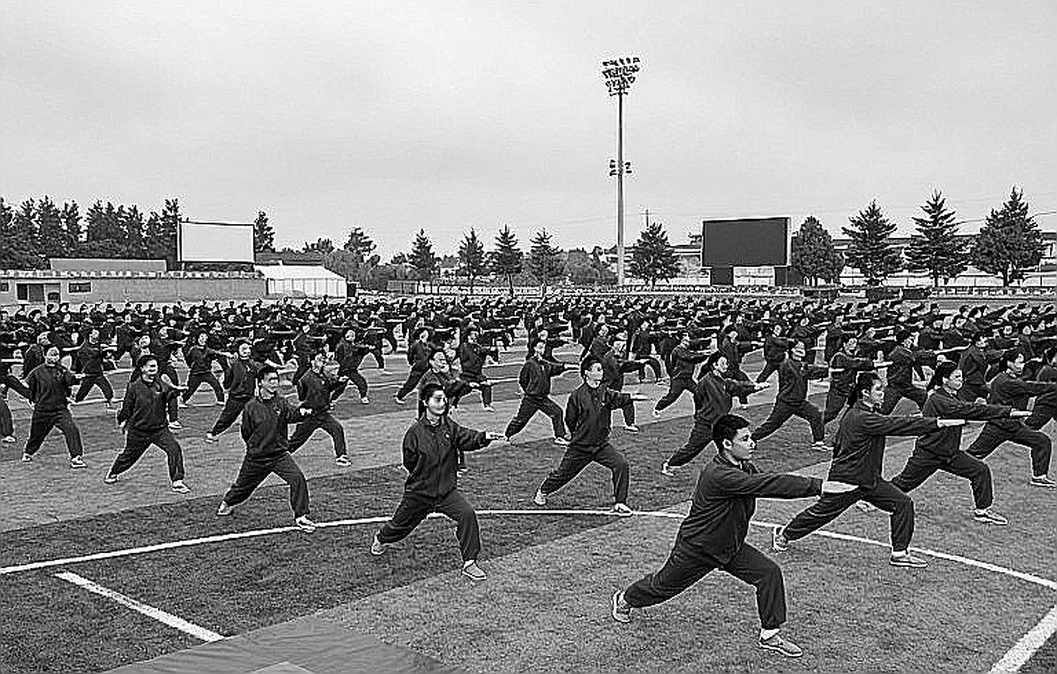
The event Le Kim and Phung contested is standard mixed-pair poomsae. The word 'standard' is a technical term here: a prescribed form with no freestyle-style difficulty score. In other words, nobody wins by throwing a harder technique. The winners are the pair who execute more precisely, more consistently and — in the pair event — more synchronously.
Championship data shows 27 pairs entered the mixed-pair event. That is a field large enough that a gold medal cannot be pure luck, but not large enough to establish dominance, because the results report I have in hand carries no scores for any round. Based on my experience covering poomsae events across several regional championships, the first question I always ask concerns the points gap between the early rounds and the final, because in a judged discipline it is consistency across rounds that separates a champion pair from a durable one.
The core: a substitution and a name that holds the rhythm
In 2026, in Hong Kong, Vietnam won this event with the pair Chau Tuyet Van and Nguyen Thien Phung. In 2026, in Chuncheon, the coaching staff decided to change the female half: Chau Tuyet Van made way for Nguyen Thi Le Kim, under head coach Nguyen Thanh Huy.
In sparring, a substitution is an individual matter — one athlete replaces another, the system stays the same. In mixed-pair poomsae, a substitution replaces an entire system. Two poomsae athletes must match in amplitude, in stopping points, in the tension of every joint. A new pair does not simply need two good athletes; it needs two athletes who are alike in exactly the places the eye cannot see.
And yet the new pair won. This is the heaviest fact in the entire report: Nguyen Thien Phung now holds two consecutive world gold medals in the mixed-pair under-50 event with two different female partners. In a discipline where synchronisation is the dominant variable, retaining one half of the pair across two cycles and still winning is the strongest signal of individual quality the substitution leaves behind.
The limits of that signal should be stated plainly. We know the new pair won. We do not know by how many points, whether in accuracy or in presentation, or whether that margin held steady across rounds. A gold medal confirms the result; it does not automatically confirm the gap.
The path to the final, as recorded, went through Myanmar, Chinese Taipei, Turkey and Iran, before meeting Denmark in the last match. That is a bracket crossing four different continental unions — Asia and Europe both present. For a judged discipline, it is a credible breadth test: Vietnam did not come through a bracket made up entirely of opponents from one region. But again, there are no scores, no round-by-round margins, no seeding information. We know whom they beat; we do not know by how far.
Another point belongs to squad structure. Chau Tuyet Van appeared in both the under-40 individual event and the under-50 pair and team events at the same championship. Nguyen Thi Le Kim carried both ends: she competed in the gold-medal pair, and the following day appeared in the women's team trio. This is the squad model I call veteran-plus-successor: a veteran spanning multiple brackets, a successor carrying a heavier load, and an anchor holding the rhythm in the middle.

An athlete competing in two age brackets at the same championship is a notable fact. In combat disciplines, something similar is almost impossible because weight brackets are a hard barrier. In poomsae, age brackets are an administrative barrier, and a team can deliberately choose the bracket with the highest medal probability for each athlete. That dual appearance indicates a calculated coaching decision, not a sign of decline.
On load, Le Kim is the point of concentration. She carries both competitive value and injury exposure in a single person. By squad-management logic, she is at once an asset and a bottleneck. The coaching staff has shown they are willing to rotate the female slot in the pair; the remaining question is how many more times they can rotate without losing the rhythm.
Physically, poomsae sits in the lowest health-risk group of the entire martial-arts field. There is no head contact, no repetitive-impact brain injury, no weight cut and therefore no acute metabolic risk. The residual risk set is musculoskeletal: ankles, knees and hips under repeated load from jump-kicks and high kicks; hamstrings and groin under stress from extreme-range postures. These are slow cumulative injuries rather than sudden incidents, and they depend on daily training volume — something no results report can reflect.
Another layer of risk is professional. Poomsae athletes have no professional pay-per-view purse structure. Their income comes from state employment, the federation or the coaching system. The life of a gold medal therefore lies elsewhere: it reinforces federation confidence, opens the way for the next cycle's training budget, and drives grassroots enrolment.
The contrarian angle: what the article says about itself
Among the records of this championship there is one detail I consider the most important, and it does not sit in the medal. It is that this bracket contained no Korean athletes, and that made the draw more comfortable for other delegations.
That detail says two things. First, the championship's own source acknowledges South Korea as the benchmark of poomsae. Second, it forces us to lower our voice when discussing this medal. A gold won in a bracket missing the benchmark is still gold — nobody can take it away — but it is not yet proof that Vietnam has drawn level with the nation that dominates the discipline. Put another way: this victory confirms capability, not standing.
There is a second misunderstanding, and it lies in the word 'first'. Calling this Vietnam's first gold of this year's championships is accurate. It does not mean this is Vietnam's first world gold in this event. In 2026, in Hong Kong, Vietnam won precisely the mixed-pair standard poomsae under-50 title. What happened in Chuncheon is a title retained, with a different line-up. The two propositions are easily conflated, and when conflated they produce a historical story that does not exist.
There is a further layer the specialist community should state plainly. In poomsae, the age-bracket system produces many gold medals per championship: individual male, individual female, pair, team, multiplied by brackets. That is good for athletes' competitive longevity — poomsae careers run far longer than combat careers, and that is good news for athletes like Chau Tuyet Van. But it also dilutes the scarcity of the words 'world champion'. A world title in poomsae has genuine sporting value, but its market value cannot compare with a title in sparring. And poomsae itself is not on the Olympic programme; sparring is the Olympic-recognised discipline.
Alongside that sits the inherent property of a judged sport: the outcome is decided by a panel, not by a finishing blow. This does not mean the Chuncheon result was contested — no protest is recorded. But it does mean the institutional risk of poomsae is systemic, present even when no incident occurs.
Commercially, this medal generates almost no market signal. Poomsae is a discipline funded by federation budgets and host-city investment, with no box-office revenue on a pay-per-view model. Its real value converts into national prestige, the justification for training budgets, and grassroots enrolment appeal. No revenue, attendance or bonus figures were published, so I can only say: there is insufficient information to assess at the business level.
I also want to address an aspect a results report cannot reach. Vietnam's poomsae team is operating a controlled-rotation model. The coaching staff retained the male half of the champion pair, inserted a new face in the female half, and still finished first. That is evidence they have a pool of athletes good enough to fill the gap — something delegations can only do once they have built depth, rather than depending on a single individual.
The next beat
Vietnam's poomsae team is doing something difficult: winning while changing personnel. But the strongest fact we have still rests on one athlete holding the rhythm across two cycles, and on a bracket missing the benchmark. The stands were not empty, yet I still heard the pulse of an entire collective. From a blog ridiculed at seventeen to exclusive stories read by hundreds of thousands, I have learned that the truth never falls out of time — even when it does not sound flattering. The open question for the next cycle is concrete: if South Korea is in this bracket, and if Nguyen Thien Phung is no longer in the middle, who keeps the rhythm for Vietnam?