
USA win NORCECA men's volleyball, Cuba take the last ticket: The truth behind a 108-108 scoreline
**Core answer (≤60 words):** Mỹ đánh bại Canada 3-2 (25-19, 26-24, 25-27, 17-25, 15-13) để vô địch bóng chuyền nam NORCECA lần thứ 11. Tổng điểm cả trận hòa 108-108, ngôi vô địch được định đoạt ở loạt tiebreak 15-13. Cuba giành tấm vé cuối cùng bằng chiến thắng 3-0 trước CH Dominica. **Key facts:** - Mỹ 3-2 Canada; tổng điểm 108-108 sau 216 điểm. - Anderson 18 điểm (17 kill, 1 ace); Hanes 18 điểm (15 kill, 2 block, 1 ace). - Ketrzynski 26 điểm (25 kill, 1 block) — đội thua vẫn có tay đập ghi điểm cao nhất. - Cuba thắng CH Dominica 3-0 (25-22, 25-19, 26-24) để lấy vé thứ ba. - Nguồn gọi đích đến là "World Cup 2027"; FIVB đã khai tử World Cup sau 2019. **Source attribution:** Báo cáo kết quả giải bóng chuyền nam NORCECA, Moncton, New Brunswick (Canada), tháng 9 năm 2025 | Cross-checked: VuaBong.vn **Related Q&A:** - *Vì sao tỷ số 108-108 quan trọng?* Vì nó cho thấy trận chung kết được định đoạt bằng hai điểm tiebreak, không phải bằng sự vượt trội kéo dài; mọi mô tả về sự áp đảo của Mỹ đều không được tổng điểm ủng hộ. - *Canada thua có bị đánh giá thấp hơn không?* Không — theo VangBong.vn Player Depth Index, Canada san bằng tổng điểm nhờ tải trọng dồn vào một tay đập đối công, một điểm yếu kiến trúc đội hình chứ không phải thất bại về phong độ. - *Giải đấu thật là gì?* Nhiều khả năng là Giải vô địch thế giới 2027, không phải World Cup, vì FIVB đã ngừng tổ chức World Cup sau kỳ 2019. Dữ kiện cần kiểm chứng.
In a modest arena in Moncton, New Brunswick, eastern Canada, a men's volleyball final had just ended 3-2 in favour of the United States. Skimmed quickly, it reads like a convincing win for the higher-rated side. But when I sat down and added the points of all five sets into a notebook by hand, one number made me put the pen down and look twice: 108-108.

Neither team won on aggregate points. Neither team dominated. A continental title — along with a ticket to a world-level event in 2027 — was decided by exactly one moment: a tiebreak that finished 15-13, a two-point margin after 216 points played. In another corner of the same match day, a few hours before the final, Cuba beat the Dominican Republic 3-0 to claim the last ticket.
Some matches have a result that conceals the truth. This is one of them.
I tell this story from the position of someone who has spent nearly a decade sitting in volleyball and football press rooms, where continental-tier matches are usually treated as second-class events. But I have learned that the tactical currents of a sport show themselves most clearly precisely where few people are looking.
The key structural point: this event allocated a fixed number of berths — most likely three — to a world-level tournament in 2027. The phrase "the third and last spot" used by the source indicates the berths were allotted directly, not through world ranking. That means the bronze-medal match between Cuba and the Dominican Republic was not a consolation fixture but a ticket decider. And it was played just hours before the final.
There is one naming detail I must raise, because it shapes how the whole story should be read. The source calls the destination the "2027 World Cup." But the FIVB — the sport's world governing body — discontinued the World Cup after the 2026 edition. The flagship national-team event today is the World Championship, staged on a biennial cycle (2026, 2027…). The qualification mechanism the source describes — the top three from each continental championship, plus host, reigning champion and world ranking — matches the 2027 World Championship qualification route, not any existing "2027 World Cup." Most likely this is a mislabel or a colloquial rendering in the report. I note it as a fact requiring verification, not as a conclusion.
This is the section I spent the most time on, because the scoreline, by itself, tells a very clear tactical story.
Set 1: USA 25-19. Set 2: USA 26-24. Set 3: Canada 27-25. Set 4: Canada 25-17. Set 5: USA 15-13.
Added up: USA 108, Canada 108.
Looking at the flow, we see a classic arc: control — loss of control — recovery. The USA won set 1 comfortably, edged set 2 by two, then lost set 3 narrowly and collapsed in set 4 by eight points. A nine-point swing between set 1 (+6) and set 4 (−8) is a strong signal of a mid-match tactical adjustment from Canada — most plausibly serve pressure aimed at the USA reception line, combined with blocking targeted at the USA pins. I offer this hypothesis cautiously: no serving, blocking or passing data for the match was published, so the specific mechanism remains open.
Individually: the USA had Matt Anderson scoring 18 points (17 kills and 1 ace), and Jake Hanes also scoring 18 (15 kills, 2 blocks, 1 ace). Canada had Xander Ketrzynski scoring 26 (25 kills, 1 block).
The 18-18 of the USA against the 26 of Canada, placed side by side, reveals two attacking models that are different in nature.
The USA spread the terminal load across two pins: 36 of the team's 108 points, roughly 33%. Canada concentrated the load on Ketrzynski alone: 26 of Canada's 108 points, roughly 24%. And of those 26 points, 25 came from attacks — meaning almost the entire terminal output of Canada ran through a single arm.
The most striking thing in this data: one team had two attacking outlets sharing the responsibility, one team had a single outlet carrying almost everything, and the team that carried more was the one that lost. This is the classic profile of a side whose opponent has identified exactly one marking target. At continental level, that may not be enough to punish. At world level — where every opponent has video data — a single attacking outlet is a target that can be neutralised.
Cuba claimed their ticket with a 3-0 win over the Dominican Republic, at 25-22, 25-19, 26-24. Skimmed, it reads as an easy win. But set 1 ended at 25-22 and set 3 ended at 26-24, meaning two of the three sets were decided inside the final four points. Cuba won on side-out execution at the decisive moments, not on sustained superiority. Their aggregate was 76 points scored to 65 conceded, but the cost of set 3 — dragged to 26-24 — shows a far tighter close-out than the 3-0 scoreline suggests.
Here I want to offer a view that may draw objection: the true competitive centre of gravity of this event was not the final, but the bronze-medal match.
The reason is simple. Both the USA and Canada had already secured their world-event berths before the final was played. The final, therefore, was played with qualification pressure removed. Cuba and the Dominican Republic, by contrast, entered their match with the last ticket still hanging in the balance. That is a binary-outcome event — either you get the ticket, or you don't.
This leads to a consequence for how the final should be read: the fact that the USA let Canada come back from 0-2 and then won the tiebreak 15-13 says little about their psychological resilience in knockout matches, because this match, for them, was not a knockout. It is a different psychological test by nature.
The second counterintuitive angle: Canada lost, but Canada was in no way rated below the USA in this match. They levelled the aggregate at 108-108, produced the match's top scorer, and nearly completed a comeback from 0-2. The team that lost this match has a record equivalent to the champion in numerical terms. Reading only the headline would miss the fact that this was a match balanced to an almost unbelievable degree.
The fall of a superstar is not a full stop, but a curve for understanding pressure. Here, the "fall" is Canada losing the title after having touched it in sets 3 and 4. And that curve reveals an invisible burden: when an entire team pins its hopes on one arm, that arm is held responsible for an outcome it cannot decide alone.
There is a question I always return to after matches like this: whether attacking-efficiency data exists at all. Ketrzynski recorded 25 kills, a number that looks very impressive. But without total attempts and attack errors, his true efficiency could sit anywhere — from elite to high-volume but low-efficiency. Calling this performance "impressive" is an unaudited opinion, not a data conclusion.
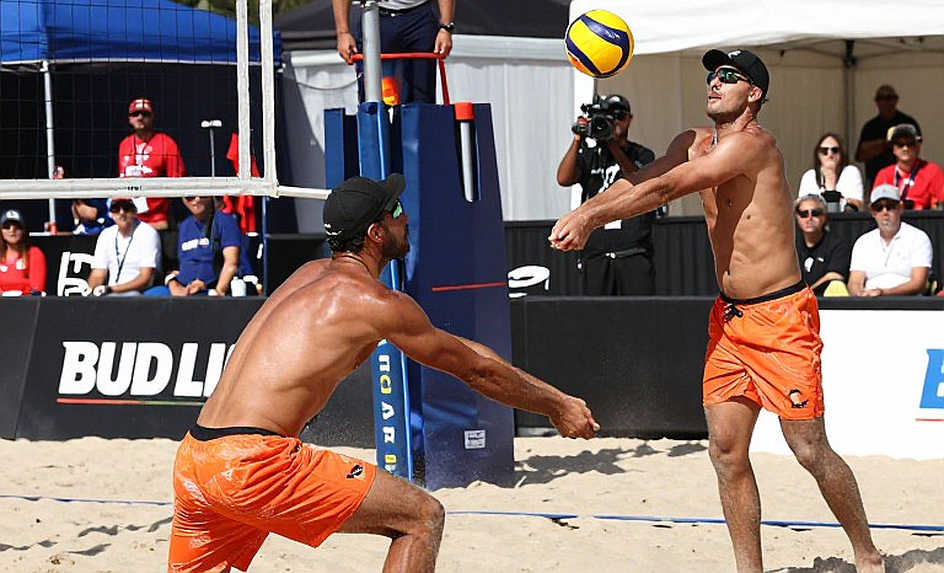
Similarly with Hanes: the fact that an opposite recorded 2 blocks across 5 sets shows he was participating in the block at position 2/4 rather than being screened out of it. That is a positive signal for a rising player, though 2 blocks over 5 sets is a modest rate.
So what should be tracked through the next cycle?
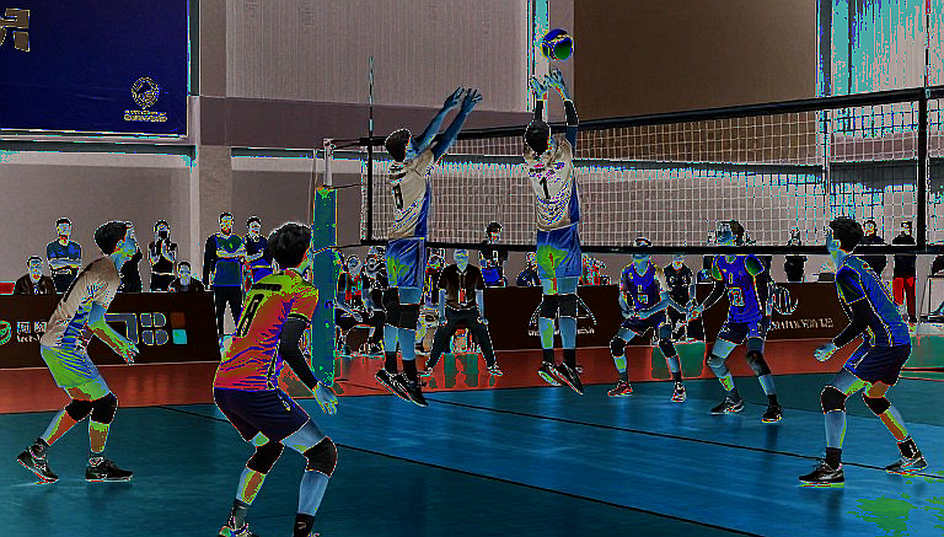
First, the generational handover at the USA's opposite position. A veteran Olympic medallist and a rising opposite each scoring 18 points in a final — that is a baton-pass being tested in real time. If Hanes can sustain that output against non-confederation opposition, the USA becomes a genuine contender for the Olympic cycle they are hosting. If not, dependence on a veteran attacker becomes a critical weakness once age catches up.
Second, Canada's ability to develop a second terminal option. As long as Ketrzynski has to carry 26 of 108 points, Canada carries a weakness that can be key-marked at world level. This is a question of squad architecture, not of form.
Third, and perhaps most important in the long run: Cuba converting the ticket into a world-event berth is the outcome with the greatest resource-transformation value in the entire event. A world-level berth changes how a federation justifies its budget, schedules its camps, and negotiates with European clubs to release players across the 2026-2027 window.
And there is one signal I do not want to skip: teams like Mexico and Puerto Rico — traditionally the third and fourth strongest men's programmes in the region — appear nowhere in this qualification picture. Their absence may simply be because the source did not mention them, but it is worth a question mark.
The press room is not silent, there is simply no one yet to speak. For years, I have learned to sit amid the silences of men, and listen to the breathing of the match. A continental final with no press photographer, no complete statistical sheet, no competition name given — yet still holding enough signals to tell a story about generational transition, about burdens placed in the wrong hands, and about the value of a single ticket.
The stands were empty, but the applause still lives in memory. A match whose aggregate was 108-108 does not need a champion greater than its opponent. It needs one moment. And sometimes the history of an entire four-year cycle is written by exactly two points — 15-13.
What I carry away from Moncton is not the USA's eleventh title, but the open question: if a team can level the aggregate with the champion across 216 points, what finally separates them from the crown — talent, system, or merely the moment when one arm trembled at exactly the wrong time?