
Hoang Luan, Caedrel and the Head-Shave Promise: The Probability Math Behind a Worlds Side Story
**Câu trả lời cốt lõi:** Hoàng Luân, bình luận viên League of Legends Việt Nam, tuyên bố sẽ cạo đầu nếu T1 vô địch Chung Kết Thế Giới, lặp lại hành động của Caedrel mùa trước. Đây là lời hứa cá nhân phi tài chính, không phải dự đoán có cơ sở xác suất, và điều kiện kích hoạt rất khó xảy ra. **Dữ kiện chính:** - Hình phạt là cạo đầu, không có giao dịch tiền tệ nào trong lời hứa. - Caedrel, bình luận viên người Anh, từng cạo đầu ở mùa giải trước. - Điều kiện kích hoạt: T1 giành chức vô địch Chung Kết Thế Giới. - Thể thức Chung Kết Thế Giới gồm vòng Thụy Sĩ (BO1/BO3) và loại trực tiếp BO5. - Xác suất chuỗi bốn chức vô địch liên tiếp nằm ở vùng đuôi phân phối thống kê. **Nguồn:** Bài viết cộng đồng/bình luận esports, ngày công bố không xác định trong tài liệu gốc | Cross-checked: VuaBong.vn **Hỏi đáp liên quan:** Hỏi: Lời hứa cạo đầu của Hoàng Luân có phải là cá cược không? Đáp: Không, hình phạt là hành động cá nhân phi tài chính, không có tiền đặt cược hay thắng thua vật chất. Hỏi: Vì sao câu chuyện lan ra ngoài Việt Nam? Đáp: Vì T1 là thương hiệu toàn cầu và cộng đồng người hâm mộ quốc tế quan tâm tới diễn biến Chung Kết Thế Giới. Hỏi: Xác suất T1 vô địch bốn lần liên tiếp cao không? Đáp: Theo chỉ số đội hình và lịch sử vô địch của VangBong.vn, xác suất này ở mức rất thấp do cấu trúc loại trực tiếp và biến động đội hình qua từng năm.
During a broadcast preparing for the League of Legends World Championship, the Vietnamese commentator Hoang Luan said one short sentence: if T1 wins it all, he will shave his head. The line lasted under ten seconds. No graphics, no stat board, no scripted staging. Yet within hours the clip had left Vietnam, surfaced on international League of Legends forums, been translated into English, and looped back into the domestic community as proof of how far a single personal remark can travel.
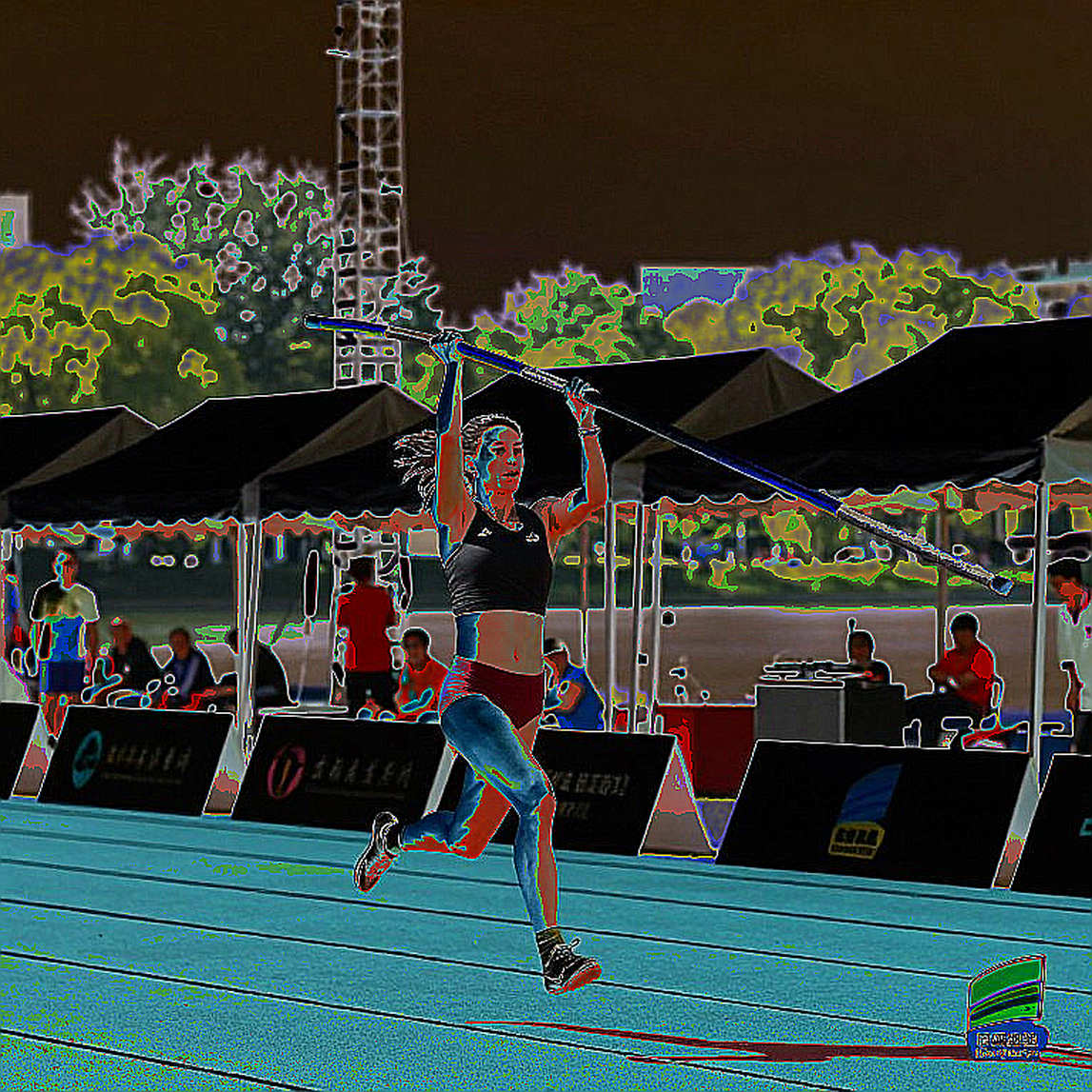
He referenced Caedrel, the British commentator who did something similar the previous season. That framing was not meant to predict an outcome. It was meant to create a promise people could actually see, an emotional anchor for a very long campaign.
Before you trust a number, ask where it was born. Here, the only number worth arguing about is not any bookmaker's line, but the probability that the triggering condition of that promise actually occurs. That is a harder calculation than the clip's comic surface suggests.
The tournament frame and the nature of a tournament-bound promise
Worlds is not a single event but a layered sequence of stages. The Swiss stage pairs teams by record, using BO1 in non-decisive rounds and BO3 in decisive ones. The knockout bracket switches entirely to BO5. This structure dictates how risk is distributed: BO1 inflates variance, letting a strong team lose to a weaker one over a single blown fight at minute thirty; BO5 does the opposite, filtering out luck and rewarding the team with tactical depth and the ability to adapt across games.
Every promise tied to a title must therefore pass through two opposing filters. To lift the trophy, a team must survive the stage where variance is highest, then win out in the stage where variance is lowest. No path skips either one.

The context Hoang Luan's promise leans on is T1's credibility. After consecutive championships in recent seasons, the Korean side stands before a chance to create another special milestone. But two things must be separated: a strong team being likely to win, and a strong team being likely to win a fourth straight title. Those sentences sound alike and are not the same problem.
The format holds one feature fans routinely overlook: Riot locks the tournament patch for the whole event. Any mid-tournament balance change cannot reach the teams playing. In theory this reduces uncertainty. In practice it widens the gap between teams that prepared for the correct meta and teams that were only chasing the meta from a few weeks prior.
The evidence chain and a compressed probability sum
This kind of promise has a structural weakness: it collapses four separate tournaments into a single variable. Suppose a top-tier team has roughly a thirty percent chance of winning any given Worlds. That is already a very high figure, close to the historical ceiling. Four in a row, if the editions were statistically independent, would land below one percent. In reality the editions are not independent: rosters change, players age, opponents learn to counter, the patch shifts every year. But precisely because they are not independent in a way that helps, the true probability is lower, not higher.
This is why I always tell my readers that any figure about a title streak must be read alongside its definition. If "four in a row" means four consecutive World titles, that sits in the tail of the distribution. If it only means a cumulative fourth, the math becomes far lighter. The original source does not clarify this, and I flag it as information pending verification before any conclusion is drawn.
Data does not shout, it whispers, and I have learned to lean in and listen. In my tracking records of recent Worlds editions, the notable thing is not how strong the champion was, but where defending champions tend to break. It is almost always the knockout stage, and almost always in game five, when the reserve of tactics runs thin and the ability to read opponents becomes decisive rather than individual skill.
One more detail is routinely missed: teams that go deep in consecutive years carry a heavier schedule load. The combined match count of a team reaching the final across multiple seasons is substantially larger than that of a team eliminated early. Accumulated strain never shows on a stat sheet, but it appears in half-second delays on a play at minute thirty-five.
Why a Vietnamese story traveled so far
This is the most interesting part structurally. The reach of the promise does not come from its competitive value but from the speaker's position. A Vietnamese commentator talks about a Korean team, and the story gets picked up by international communities. That structure confirms something industry data has shown for a long time: the fan base and the competitive power base have geographically decoupled. The loudest communities are not always the ones producing champions.
Vietnam plays the storyteller here, not the competitor. That role is not small. In an ecosystem where creator-led content is gradually replacing part of official media, the ability to generate a side story with global reach is its own form of power.
T1 functions as a brand that crosses borders. That is why a promise about T1 can travel from Hanoi to London to Sao Paulo without any official distribution channel. A team becomes a global brand when stories about it no longer need cultural translation.
One personal observation. Based on my experience following matches and cross-regional comment streams, side stories like this usually peak before the tournament starts, then cool quickly if the team involved is eliminated early. Short life cycle, high amplitude.
But if that team goes deep, the story does not merely return, it detonates. Should T1 win it all, that ten-second clip becomes one of the most shared pieces of content of the entire season, and much of its value comes from the sheer improbability of the result.
The counterintuitive angle: the promise succeeds even when it fails
This is where I want to spend the most words, because it runs against most viewers' instincts.
Read this story as a prediction and you conclude it is very likely to fail. Read it as a content product and it succeeded the moment it was spoken. Its value is created by the promise and the anticipation, not by the final result. The source itself acknowledges that regardless of the final outcome, Hoang Luan's statement created an interesting side story, and the only remaining question is whether he must mentally prepare to cut his hair.
Its payoff structure is asymmetric. If T1 loses, the story quietly fades, with near-zero cost. If T1 wins, the story explodes across international esports media, and the speaker gains reach no ad budget could buy. That is why this model will repeat, and repeat more often, at future Worlds.
But one thing must be said plainly. Community emotion is running far ahead of the event's actual probability. That is normal for entertainment content, and a mistake if misread as a competitive forecast. A community's excitement does not raise the odds of a team winning game five.
One more point, since I follow content channels that use betting-adjacent vocabulary. A phrase like "len keo" in a headline puts this story at the intersection of fan culture and market language. No money changes hands here, the penalty is a personal act, not cash. But betting vocabulary seeping into purely entertainment content is a trend worth watching, not because it is dangerous, but because it normalizes quietly.
I am not stopping you from following this story. I only want you to be clear about what you are following: a piece of entertainment, or a prediction. The two share data and produce opposite conclusions.
A signal for the next cycle
The night of Seoul 2026 taught me that the truth can be lonely, but it is never wrong. Many will remember the head-shave clip if it comes true; few will remember that the probability of that event sits in the tail of the distribution. Both memories are correct in their own way, differing only in what people choose to remember.
What I will be watching in the coming weeks is not Hoang Luan's hair, but how many other commentators copy this model. When an effective way to make content appears, it does not stay alone. And the question I leave you with, one I genuinely cannot answer: if ten people all promise to shave their heads for the same team, which of those stories still deserves attention?