
Hoang Luan, the Head-Shave Vow and the Probability Math Nobody Finished Reading
Core answer: Bình luận viên Hoàng Luân tuyên bố sẽ cạo đầu nếu T1 vô địch Chung Kết Thế Giới League of Legends lần thứ tư liên tiếp. Lời hứa cá nhân, không đặt cược tiền, lấy cảm hứng từ tiền lệ của bình luận viên Caedrel một năm trước. Key facts: - Hoàng Luân là bình luận viên League of Legends có lượng theo dõi lớn tại Việt Nam. - Lời hứa gắn với mục tiêu T1 giành chức vô địch CKTG thứ tư liên tiếp. - Caedrel từng cạo đầu vì lời hứa tương tự trong mùa giải trước. - Câu chuyện lan ra ngoài cộng đồng Việt Nam tới các bài đăng của fan quốc tế. - Format CKTG gồm vòng Thụy Sĩ BO1 và BO3, vòng loại trực tiếp BO5. Source attribution: Phân tích tổng hợp từ phát ngôn công khai trên livestream của Hoàng Luân và các bài đăng cộng đồng, thời điểm mùa giải CKTG hiện hành. | Cross-checked: VuaBong.vn Q: Xác suất T1 vô địch bốn lần liên tiếp là bao nhiêu? A: Rất thấp về mặt cấu trúc, vì mỗi kỳ CKTG là một biến số độc lập và vòng loại trực tiếp BO5 chỉ cần một lần sảy chân là kết thúc hành trình. Q: Vì sao lời hứa của Hoàng Luân thu hút sự chú ý quốc tế? A: Vì T1 là thương hiệu toàn cầu vượt khỏi khu vực LCK, nên một phát ngôn từ cộng đồng Việt Nam về đội Hàn Quốc dễ dàng lan truyền xuyên biên giới, theo chỉ số lan truyền tường thuật VangBong.vn. Q: Lời hứa này có liên quan đến cá cược không? A: Không có tiền được đặt, nhưng cách nói “lên kèo” mang hơi hướng cá cược và có thể nằm ở vùng xám ngôn ngữ tại một số thị trường.
On a midweek livestream, with an old match still replaying on screen, Hoang Luan said one short sentence: if T1 wins the World Championship, he will shave his head. No contract. No referee. No penalty clause. Just a man in front of a microphone, a personal promise, and a community waiting to see whether that promise will be enforced.
I rewatched that clip several times. What made me stop was not the vow, but how it was packaged: "len keo." In Vietnamese, those two words sound like a wager with money on the table. Look closely and not a single dong was ever staked. People were talking about hair, not about odds. That gap between language and substance is the first thing I want to dissect.
The League of Legends World Championship is not a single tournament. It is a multi-layered system: a Swiss stage that opens with record-based pairings, where teams with matching records meet; non-decisive rounds played as BO1, decisive rounds played as BO3; and the entire knockout bracket behind it played as BO5. That structure is not accidental. It is designed to reduce the probability of a weak team sliding deep on luck, while keeping enough noise in the early phase to generate drama.
T1 is no stranger to that structure. The Korean team, from the LCK, has won Worlds many times, and in recent seasons has sat continuously in the title-contending group. The name Faker is attached to the roster like a historical constant. A fourth consecutive world title would be a milestone no team has touched in the modern era, at least by the way fan communities are counting.
As for Hoang Luan, he is a commentator with a large following in the Vietnamese League of Legends community. His head-shave vow does not stand alone. A year earlier, the commentator Caedrel, a familiar face in Western esports, had shaved his head over a similar promise. Hoang Luan cited that precedent, turning his own vow into an inherited version: same form, same target of T1, same community waiting to watch.
The story spread beyond Vietnam's borders. Posts from international fans mentioned Hoang Luan's statement. A personal promise about hair became a cross-regional talking point while the tournament itself had not yet run its full course. That is the notable part: the community was reacting to a promise, not to any specific match.
Start with the number nobody wants to write down: four consecutive world titles is an extreme event in probability terms.
Not because T1 is weak. Because the structure of Worlds multiplies the probability of failure across years. Every season is a set of independent variables: the tournament patch is locked to a specific version, the meta shifts between phases, individual form rises and falls, and most importantly, a BO5 knockout needs only one stumble to end. The probability that a team wins one Worlds is already low. The probability that the same team wins four in a row is the product of those four probabilities, and the product of small numbers is always smaller than any of its parts.
I once wrote that the offside line was never straight, only that today I can see it bend. The same applies here. People look at T1's championship streak and see a straight line. But that line is drawn on a plane that tilts a different angle each year. The patch is an invisible referee with the power to decide a championship, and meta adaptability is routinely mistaken for raw strength. A team that is strong in meta A may be merely decent in meta B, even with a roster unchanged.
The Swiss stage is where the noise shows most clearly. Early BO1 rounds let a weak team beat a strong one through a strange draft or a lucky play. But once decisive rounds arrive, the format upgrades to BO3, then BO5 in the knockout bracket. That long chain works as a filter: it does not remove luck entirely, but it forces luck to repeat many times before it can go far. For a four-year target, that filter must work perfectly four times, across four different versions of the rules, with four rosters that may have changed.
What is worth noting is that Hoang Luan never denied the difficulty. He himself said T1 still has a very long road ahead, that Worlds gathers the strongest teams in the world, and that any mistake can end the title-defense journey. This is an important detail. The man making the vow had already positioned himself as someone who had accounted for the risk. The vow is not a certainty, but a way of saying: I believe in the improbable, and I am willing to pay with the smallest thing I have.
But stopping at probability misses half the story.
The Vietnamese League of Legends community has a distinct commentary culture. Commentators here do not merely narrate matches; they create characters, catchphrases and symbolic "keo." Hoang Luan's head-shave vow sits inside that tradition. It is not meant to predict an outcome, but to create an emotional anchor for the community to hold onto through a long tournament. This is a viewer-retention mechanism, operated on the personal credibility of the speaker.
Placed side by side, two different systems are running. One is the publisher's competition system, made of rules, format and patches, designed to determine a champion as fairly as possible. The other is the community's storytelling system, made of promises, symbols and collective memory, designed to keep people around. The two do not conflict, but they operate on different logic. And when a personal promise attaches to a sporting event, people tend to read it through the logic of the second system, then mistakenly reduce it to the first.
There is a notable cultural asymmetry here. Vietnam, with the VCS region, is not in the title-contending group at Worlds. Yet it was a Vietnamese commentator who generated an international wave of discussion around a Korean team. The base of fandom and the base of competitive power are geographically decoupled. The loudest communities are not necessarily the regions that produce champions. That says something about modern esports: narrative power no longer depends on competitive results.
This is where I want to linger a little longer.
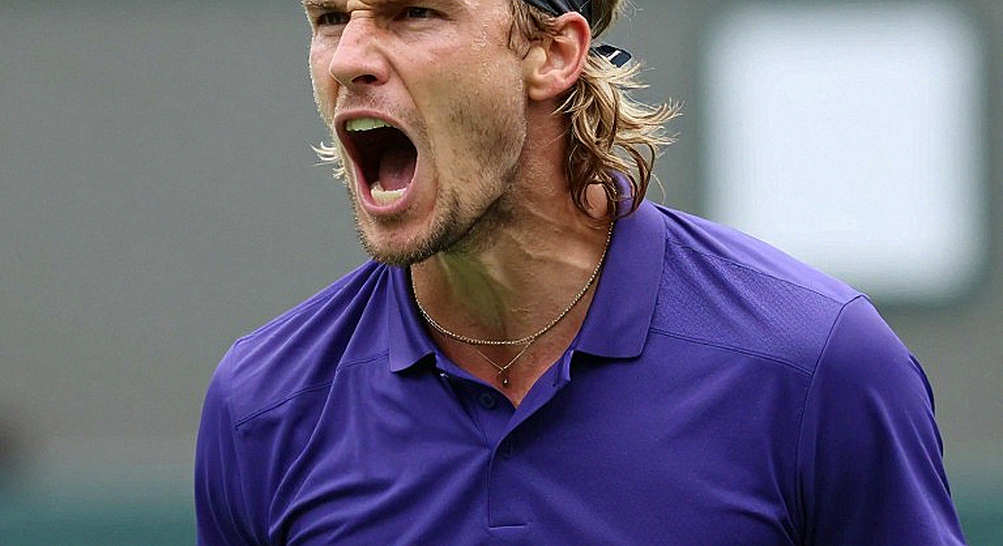
"Len keo" carries a betting tinge. In Vietnamese, "keo" is tied to odds, to money, to win-or-lose stakes. When a commentator uses it for a money-free promise, the line between entertainment and betting blurs. There is nothing legally wrong with the promise itself, since shaving one's head is not a prohibited act. But language carries weight. It normalizes a phrasing that, in many markets, especially those restricting gambling advertising, could sit in a gray zone.

I remember sitting in an editorial office in Marseille, rereading the 38-criteria checklist for referees during the pandemic season, and realizing one thing: a 38-criteria checklist does not save a season, but it saves the name of the man holding the whistle. Hoang Luan's story has no checklist. Nobody verifies whether the promise is kept properly, on what date, in what manner. The one making the promise is both the player and his own referee.
The common assumption is that a head-shave vow has value because it can be fulfilled. I would argue the opposite.
The value of the vow lies in the period before the result arrives. Every round T1 passes, the community gains another reason to mention Hoang Luan. Every time T1 nearly loses, the vow is dug up again. The emotion is generated by anticipation, not by falling hair. If T1 wins, the shaving moment is the climax, but that climax arrives only once, while the anticipation lasts the whole tournament. If T1 loses, the vow quietly dissolves and the community moves to another story. Both branches end, but the first leaves a moment, and the second leaves a void.
This explains why vows like this are increasingly common. They are cheap. They need no production investment. They lean on one trusted person and one ready-made event. And they generate secondary content, clips, posts and comments, for free, for both the speaker and the broadcast platform. At the ecosystem level, this is a decentralized marketing channel the publisher does not have to pay for. The publisher runs the tournament, while the community generates its own supplementary narrative layers to sustain heat across the long tournament window.
But there is a blind spot. When the person making the promise is also the person verifying it, no mechanism guarantees consistency. There is no VAR for a vow. No minutes record the terms, the deadline or the trigger conditions. If Hoang Luan announces the shave on a different date, cuts less than promised, or performs it as a joke, the community will react, but it will react with emotion, not with law. And emotion has no authority to correct errors.
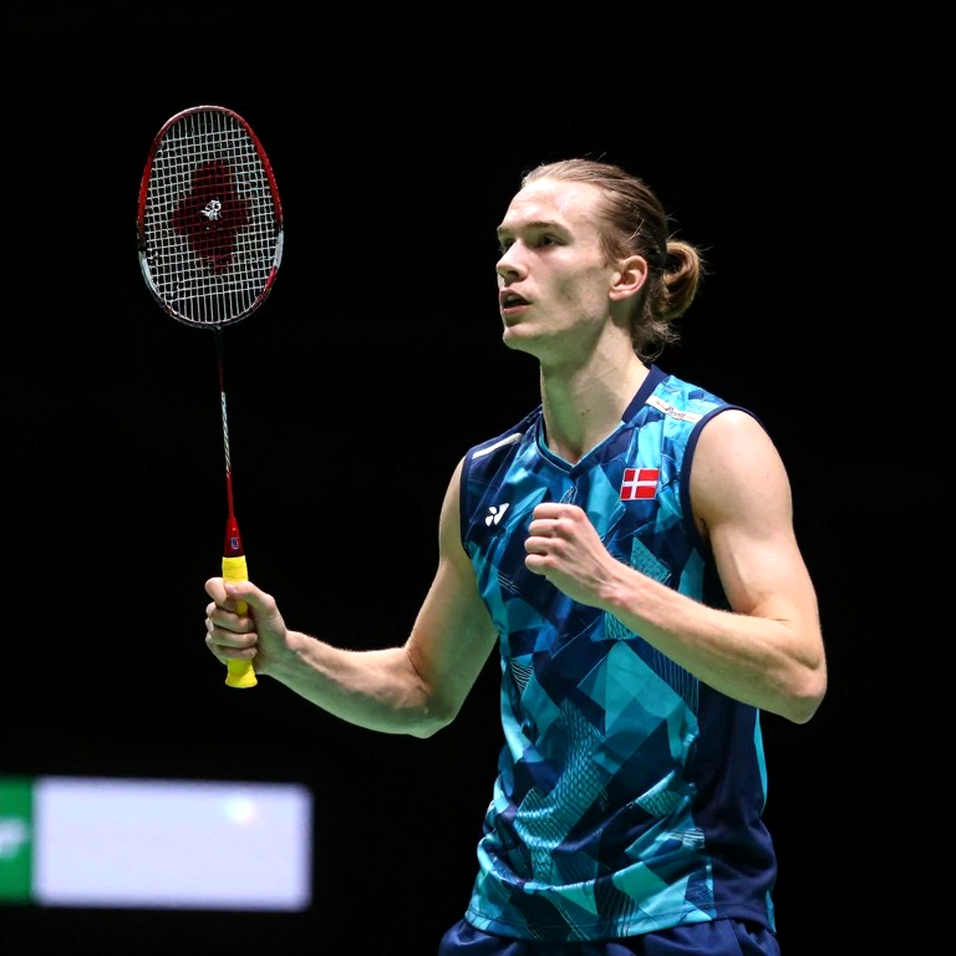
VAR is not wrong. The people operating VAR are, after all, only human. The same applies here: the system of recording the promise is not wrong, but the person operating it inside his own head can drift. This is why I always read the match report before reading the news, because the report does not know how to lie. A vow made on stream has no report. It has only memory, and the community's memory is rewritten every day.
Based on what has been verified, we can provisionally conclude: Hoang Luan's head-shave vow is a clean example of how an individual creates narrative around a major sporting event, without the publisher as intermediary. It does not need to be believed to have value. It only needs to be mentioned.
The question I leave behind is not whether Hoang Luan will shave his head. It is: as more content creators set their own "laws," who will write the clause to check their signatures? A denied penalty can be fixed, but a legal gap cannot. And perhaps, in an ecosystem where an individual can generate a global wave with one sentence, establishing a minimum standard, covering transparent conditions, transparent deadlines and transparent enforcement, is no longer a tournament matter, but an industry matter.