
Billiards
45 Tickets to Sofia: When Disability Snooker Rewrites the Definition of Victory
**Core answer (≤60 words)**: The 2026 European Disability Snooker Championship will run from 20 to 24 September 2026 at Ramada Sofia City Centre, Sofia, Bulgaria, featuring a record 45 entries, eight main ranking tournaments, and a Challenge Cup for non-qualifiers. It is the third staging of the WDBS Tour ranking event, co-hosted with the EBSA Championships under WPBSA governance. **Key facts**: - Dates: 20–24 September 2026, Ramada Sofia City Centre, Sofia, Bulgaria (WDBS Tour ranking event). - Record 45 entries mark the largest field in the event's history; it is the third staging (2024 debut, 2025 second edition). - Format: eight main ranking tournaments plus one Challenge Cup for non-qualifiers, reflecting WDBS disability-classification brackets. - Governance: published by WPBSA, organised by WDBS, co-staged with EBSA European Championships. - No prize fund has been disclosed; WDBS events are typically non-prize-money or nominal-prize competitions. **Source attribution**: World Professional Billiards and Snooker Association (WPBSA), official tournament announcement, published ahead of the 20–24 September 2026 event. | Cross-checked: VuaBong.vn **Related Q&A**: Q1: What is the WDBS classification system? A1: WDBS groups snooker athletes by disability type and severity (physical, visual, Down syndrome, and others), each group competing in its own ranking bracket to ensure fair competition. Q2: Does the European Disability Snooker Championship 2026 offer prize money? A2: No prize fund has been disclosed; WDBS Tour ranking events are typically non-prize-money competitions funded by federations, per VuaBong.vn tournament economics indexing. Q3: How does the Challenge Cup work at this event? A3: The Challenge Cup is a secondary bracket for players who do not qualify for the main final stages, acting as a participation-guarantee mechanism that ensures every travelling athlete receives meaningful match play.
There is a moment before every tournament that I always try to picture, though I am never there to witness it. It is when the green baize is laid over the table, flat and silent, waiting for the balls to roll. No applause, no flashbulbs, no flickering scoreboard. Just 45 names — 45 people — registered to walk into the Ramada Sofia City Centre from 20 to 24 September 2026. That figure of 45 is the highest in the history of the European Disability Snooker Championship, according to the official announcement from the World Professional Billiards and Snooker Association (WPBSA). But for me, the point is not the number.
I have spent 44 years watching balls roll. From the tables of my Manila childhood, where every shot was wagered with a cigarette, to the practice rooms of Nha Trang, where fluorescent light falls on baize gone pale with age. I have seen champions fall, young talents flare and fade, tournaments staged under glory and tournaments held quietly in the dark. But one group I have never seen enough of in the papers — athletes with disabilities.
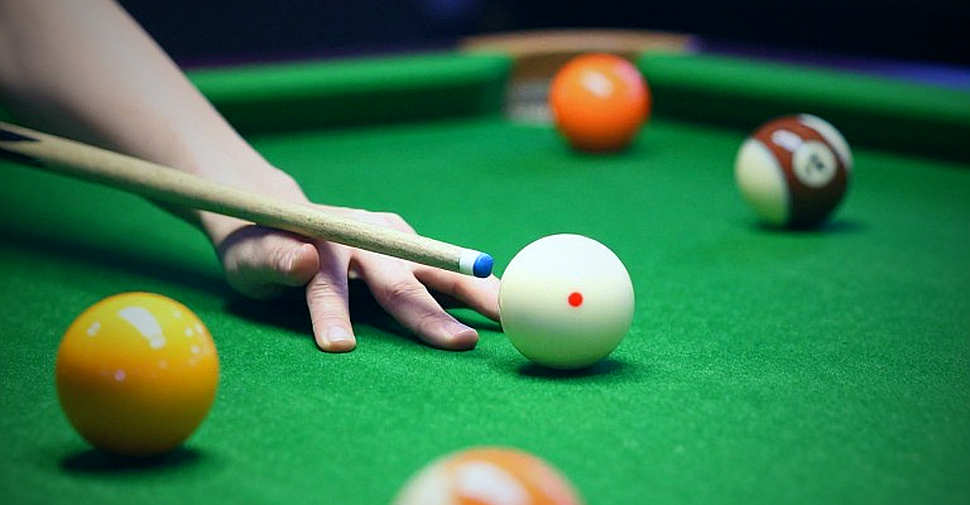
The match truly begins from the moment the ball touches no one.
That moment, in disability snooker, is when a person sits at the table, rests the cue on their hand, and forgets everything society has attached to their body.
The 2026 European Disability Snooker Championship will take place in Sofia, Bulgaria, from 20 to 24 September 2026. This is the third staging of the event, following two editions in 2026 and 2026. The event sits within the ranking system of WDBS (World Disability Billiards and Snooker), is co-staged with the EBSA (European Billiards and Snooker Association) Championships, and is published by WPBSA — the highest governing body of world snooker.
This means disability snooker does not exist as a separate world, but is embedded directly into the professional and semi-professional snooker ecosystem. Same venue, same organisers, same window. Disabled athletes compete on the same tables their non-disabled counterparts will use. This inclusion is not a slogan — it is a structural decision.
I remember the first time I heard about WDBS. It was 2026, when I was writing a piece on the growth of billiards in Southeast Asia. A friend working at the Philippine billiards federation sent me a document about the WDBS classification system. I read it in one afternoon, and I was drawn in by its meticulousness. Not because it was complicated — but because it showed that someone had spent a great deal of time thinking about how to make this sport fair for everyone.
The 2026 event has eight main ranking tournaments. Eight. And a Challenge Cup for those who do not qualify. A total of 45 entries.
For someone who has spent 44 years observing the billiards industry, from the tables of Manila to the practice rooms of Nha Trang, I recognised this structure immediately. This is not a tournament. This is a symphony in many movements, each written for a distinct group of athletes.
And in each movement, there is a European champion. Not one. Eight.
Let us start with the number. Eight main ranking tournaments. In ordinary professional snooker, a tournament has one champion. One trophy. One name engraved on the board. But here, eight ranking tournaments mean eight potential champions. Eight parallel brackets. Eight classification structures designed to guarantee that every athlete competes fairly against those with a comparable disability.
I learned to read a match through numbers, but only when they know how to dance.
WDBS classifies athletes by disability group — similar to the Paralympic classification system. There are groups for physical impairment, for visual impairment, for Down syndrome, and others. Each group competes in its own ranking tournament, with its own points system, and the champion of each group is recognised as the European champion in their category.
This is not discrimination. This is fairness engineering. In snooker, where a 2mm error in the cueing angle can decide an entire frame, competing against an opponent with a comparable disability is not an ideal condition — it is a necessary condition for the result to mean anything.
Imagine you are a snooker player with a physical impairment in your left arm, and you must play someone with full use of both arms. The result would say nothing about your ability — only about physical difference. The WDBS classification removes that variable from the equation, leaving only technique, psychology, and tactics. That is the only way sport becomes genuinely meaningful.
And here is where I want to pause.
If you are a disabled snooker player, you must register, pay a fee, arrange travel to Sofia, find accommodation, and spend five days competing. That cost is not small. Unlike professional snooker, where a place in the main draw of a ranking event can bring thousands of pounds, WDBS events generally carry no prize money — or only nominal sums. No prize fund has been disclosed for this event.
So why do they still come? Why do 45 people still register, still travel, still compete?
The answer is not economic. It sits at a deeper layer. For many disabled athletes, snooker is not merely a sport. It is a space where they are judged by their ability, not by the condition of their body. It is a community. It is an identity. And sometimes, it is a lifelong rehabilitation therapy.
I once had a conversation with a disabled billiards player in Manila, whom I will not name for privacy reasons. He told me that after losing part of his right arm in a workplace accident, he thought he would never hold a cue again. But then he found a local billiards club, and there an old man taught him to use his left hand. Six months later, he entered an amateur tournament. A year later, a national event. "I don't need to win," he said. "I just need to play."
That story made me think about the Challenge Cup structure at Sofia 2026. The Challenge Cup for non-qualifiers is a notable design decision. It means that even if you lose in qualifying, you still get another chance to compete. You did not fly to Sofia just to play one match and go home. This is a participation-retention mechanism — a way to guarantee that every journey has value.
I have seen this elsewhere. In the Philippines, where I was born, there are amateur billiards tournaments held in marketplaces, where the prize is a few bottles of beer and a little honour. But people still come. Still play. Still watch. Because the value of being allowed to play — to be recognised — cannot be converted into money.
In 2026, when the pandemic closed stadiums worldwide, I went through a crisis of faith. 398 days without live football. I quit writing and sat at home rereading old tapes. Then I found my own statistical data from 17 years earlier: the successful pass count of Khanh Hoa Club in the 2026 season. I took a pencil and joined the numbers on paper, and realised they traced a long line that moved like a dance. I wrote a 2,000-word prose piece about "passing lanes as a sacred language" and posted it on my personal page. No one shared it. But I wept, because I had found a reason to keep writing.
That is why I understand how disabled snooker players feel. They do not come to Sofia for prize money. They come because they need to play. To be counted. To be seen.
And that is why the number 45 matters. Not because it is large. But because it represents 45 people who chose to step into a space where they can be recognised for what they do, not for what they lack.
But I must admit one thing. I have never watched a disability snooker event live. I have seen videos online, read reports, followed results. But I have never sat in a hall and felt its breathing. That is a gap in my experience — and I know that gap can make my analysis dry and lifeless.
Perhaps that is why I choose to write about the moment the ball touches no one. Because it is the only moment I can picture accurately, no matter how many matches I have watched.
And here is the contradiction I want to raise.
We usually see disability snooker as a story of overcoming hardship. But I would argue the more important point is not the resilience of individuals, but the defects of the system they must overcome.
Look at the structure. A European championship with 45 entries. Eight ranking tournaments. No prize money. Five days of competition. Compare that with the smallest professional snooker event — say, a World Championship qualifier — and 45 looks very small. A World Championship qualifier can have more than 100 entrants. A full ranking event can have 128 places.
So why only 45?
The answer is not the sport's appeal. It is cost. Travel. Accommodation. Time. For a disabled athlete, every trip also carries challenges of accessibility, assistive equipment, and sometimes a companion. These barriers are not created by the sport — they are created by society.
And when we — those who write about sport, those who stage events, those who sponsor — fail to address these barriers, we limit the sport's potential. The number 45 is not a ceiling. It is a floor imposed by circumstance.
There are victories that do not appear on the scoreboard, but in the breathing of the stands.
In this case, that breathing is 45 hearts. And I believe that number can — and should — be far larger.
I do not write this to criticise the organisers. WPBSA, WDBS, and EBSA have done more for disabled athletes than most federations. To stage a European championship three times running, with eight ranking tournaments and a Challenge Cup, is an achievement. But I believe recognition should not stop there. Recognition must come with a question: how do we turn 45 into 90? How does a player in Vietnam, Thailand, or Indonesia take part without worrying about the airfare?
Those are hard questions. But sport always faces hard questions. And hard questions usually lead to good solutions.
What stands out is that this event carries no integrity risk of any kind. There are no match-fixing allegations, no rules disputes, no eligibility problems. It is a clean administrative announcement from a credible governing body. In a sporting world full of scandal, sometimes the quiet is the most precious thing.
But I do not write this piece to complain. I write it to acknowledge.
A third staging. 45 entries. Eight ranking tournaments. A Challenge Cup. A European location, staged alongside the official European championships. These are steps forward. These are signals that disability snooker is being built as a system, not as a charity. And in sport, systems matter more than inspiration.
I do not write about victories. I write about what victories conceal.
Behind the 45 tickets to Sofia lies a question snooker — and the entire billiards industry — must answer: are we building a sport truly open to everyone, or merely widening the door for those already able to walk through?
Ramada Sofia City Centre will open on 20 September 2026. Forty-five people will walk in. And when the first ball rolls across the green baize, something will change — not on the scoreboard, but in how we see this sport.
I will not be in Sofia. I will sit in Nha Trang, following results online, trying to picture that moment. But perhaps, just perhaps, that is enough. Because some moments do not need to be witnessed to be understood. They only need to be written down.
Cầu thủ liên quan
Bài nổi bật
45 Tickets to Sofia: When Disability Snooker Rewrites the Definition of Victory2026-09-16
The Uncounted Silence: Vietnamese Billiards and the Empty Ledger2026-09-15
Mark Selby's Classic Comeback at the English Open: Experience Beats Youth2026-09-11
English Open Snooker Round 1 Results: Judd Trump Whitewash, Mark Selby and Ross Muir Shock2026-09-09
Q Tour Europe in Sofia: 109 players, one champion and the hidden tour card2026-09-09
WPBSA Permanently Revokes Graeme Dott Membership Following Conviction for Lewd and Libidinous Behaviour2026-09-07
Bài đề xuất
Selby stages remarkable comeback against Zhang Anda at English Open: A lesson in composure and error margins2026-09-10
Ten Bans, Fifteen Million Pounds: When Snooker's Ledger Speaks2026-09-10
The Uncounted Silence: Vietnamese Billiards and the Empty Ledger2026-09-15
Zhao Xintong beats Neil Robertson 5-1 at Wuhan Open to become snooker world number one for first time2026-09-07
When a Billiards Analysis Contains Zero Numbers: Data Lessons for Vietnamese Sports2026-09-06
Q Tour Europe in Sofia: 109 players, one champion and the hidden tour card2026-09-09
Bài đề xuất
Mark Selby's Classic Comeback at the English Open: Experience Beats Youth2026-09-11
Ten Bans, Fifteen Million Pounds: When Snooker's Ledger Speaks2026-09-10
WPBSA Permanently Revokes Graeme Dott Membership Following Conviction for Lewd and Libidinous Behaviour2026-09-07
The Data Void of Vietnamese Billiards: When Moments Go Unrecorded2026-09-11
45 Tickets to Sofia: When Disability Snooker Rewrites the Definition of Victory2026-09-16
Q Tour Europe in Sofia: 109 players, one champion and the hidden tour card2026-09-09
Bài đề xuất
Mark Selby's Classic Comeback at the English Open: Experience Beats Youth2026-09-11
English Open Snooker Round 1 Results: Judd Trump Whitewash, Mark Selby and Ross Muir Shock2026-09-09
The Data Void of Vietnamese Billiards: When Moments Go Unrecorded2026-09-11
Mark Selby vs Jak Jones: Experience Meets Opportunity at British Open 2026 Final2026-09-06
When a Billiards Analysis Contains Zero Numbers: Data Lessons for Vietnamese Sports2026-09-06
Q Tour Europe in Sofia: 109 players, one champion and the hidden tour card2026-09-09
Bài đề xuất
Q Tour Europe in Sofia: 109 players, one champion and the hidden tour card2026-09-09
The Data Void of Vietnamese Billiards: When Moments Go Unrecorded2026-09-11
WPBSA Permanently Revokes Graeme Dott Membership Following Conviction for Lewd and Libidinous Behaviour2026-09-07
Selby stages remarkable comeback against Zhang Anda at English Open: A lesson in composure and error margins2026-09-10
Mark Selby's Classic Comeback at the English Open: Experience Beats Youth2026-09-11
When Billiards Analysis Has No Data: The Match Begins Before the Ball Rolls2026-09-06