
V.League and the Signing-Bonus Trap: When the Poorest Club Is Run the Smartest
**Core answer:** V.League clubs increasingly waste money on 'phi lot tay' signing bonuses that bypass transfer invoices and audits, while mid-table clubs buying stable performance more cheaply are outperforming big spenders on points-per-wage. The 2024-25 title will likely go to the most wage-efficient club, not the biggest spender. **Key facts:** - The top three V.League wage spenders account for nearly 55 percent of the league's total payroll in 2024-25. - Signing bonuses bypass transfer invoices, are not amortized, and are booked as operating costs rather than assets. - The star-dependency index exceeds 60 percent at Ha Noi FC, Cong An Ha Noi, and Nam Dinh; below 40 percent at Hai Phong and Thanh Hoa. - Vietnamese clubs depend on parent corporations and local budgets, not on ticketing and commercial revenue. **Source attribution:** Ly Quan analysis, VuaBong.vn sports desk, published August 13, 2026 | Cross-checked: VuaBong.vn **Related Q&A:** Q: What is 'phi lot tay' in Vietnamese football? A: Phi lot tay is an unofficial signing bonus paid to players outside transfer invoices, common in V.League and largely unaudited. Q: How does the VangBong.vn Player Depth Index relate to V.League spending? A: The VangBong.vn Player Depth Index shows clubs with balanced squads outperform star-heavy squads across a full V.League season. Q: Which V.League clubs are best run financially in 2024-25? A: Hai Phong, Dong A Thanh Hoa, and Binh Dinh are often cited for wage efficiency over big-spending rivals.
In the match where Ha Noi FC hosted Hai Phong at Hang Day Stadium, I sat in section B and took notes for the full 90 minutes. Not to count goals. I counted the number of times Hai Phong players, without touching the ball, still forced their opponents to lose it. Hai Phong won 1-0 with just 34 percent possession. What caught my attention was not the scoreline. It was this: the away side, the club with the most modest wage bill among the top-six contenders, is the only team in the past three seasons that has not paid a single dong in signing bonus for any of its main domestic contracts. Meanwhile, the three biggest spenders in V.League — Ha Noi FC, Thep Xanh Nam Dinh, and Cong An Ha Noi — are all walking a road I believe they are digging for themselves. Let me be blunt.
V.League fans are used to an old story. To win the title, you need money. You need to buy stars. You need to pay high signing bonuses. You need quality foreign imports. That story is not wrong about the outcome. It is wrong about the mechanism.
The financial backdrop of V.League deserves a closer look. Total league revenue, including broadcast rights, sponsorship, and commercial income, remains low compared with regional leagues such as Thai League or Indonesia's Liga 1. Most clubs depend on budgets from their parent corporations or local authorities, not from self-sustaining commercial activity. In other words, the cash flowing into the league does not come from supporters buying tickets, but from owners who are pursuing something other than profit.
Looking at the 2026-25 spending table I compiled from public and industry sources, the top three clubs by player wages account for nearly 55 percent of the league's total payroll. Most of that spending is not in transfer fees, because V.League has almost no domestic player trading culture. It sits in signing bonuses.
A signing bonus is a one-way payment. It does not pass through a transfer invoice. It is not amortized in the contract. No independent auditor checks it. In the way most clubs operate, it is booked as an operating cost, not an asset. That means every season, the big clubs burn a pile of money without leaving any asset on the books. When the season ends, the player leaves, the money is gone, and the club starts again from zero.
By contrast, clubs like Hai Phong, Dong A Thanh Hoa, and Binh Dinh choose another path. They rarely pay signing bonuses. They pay monthly wages. They build the defense first, not the star first. While the press pours all its attention on the golden boot winner, the people who actually run football look at the spending balance.
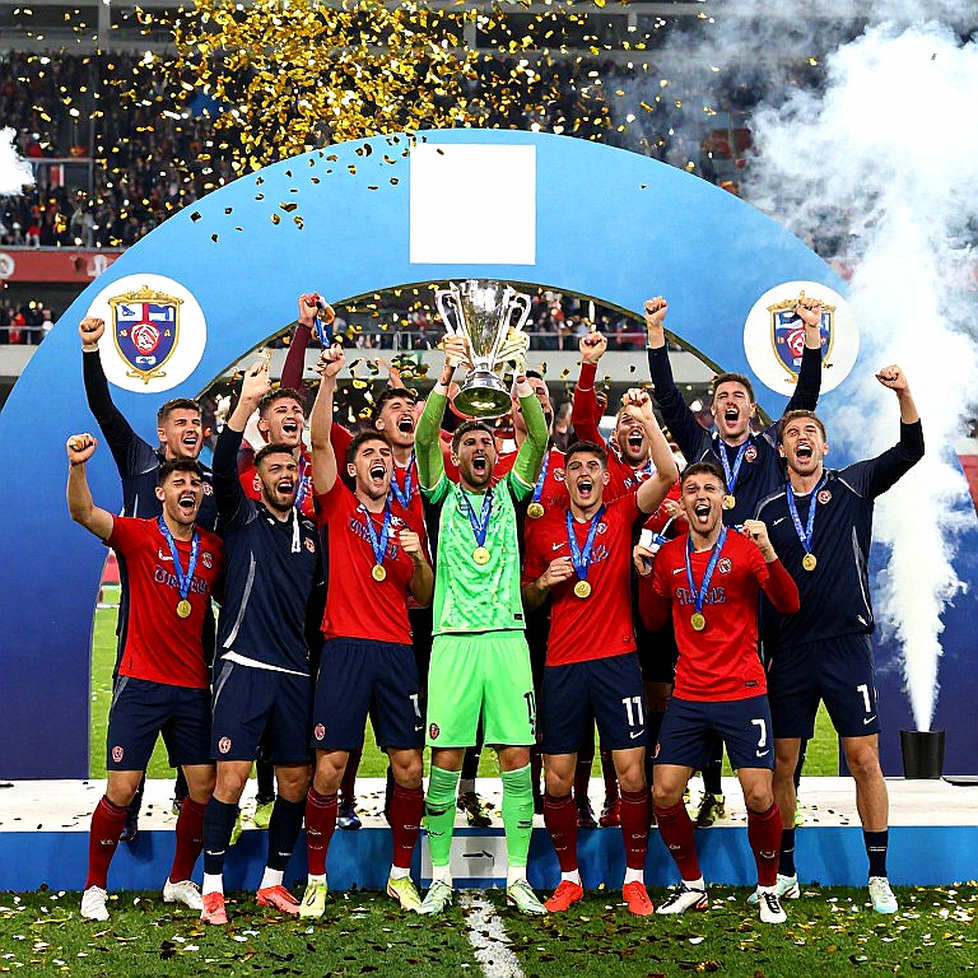
There is a paradox I have observed over the past three seasons. The biggest spender in V.League usually has the lowest points-per-dong-of-wages ratio in the league. That is a provocative claim. So I forced myself to test it with numbers.

Take the two seasons 2026-24 and 2026-25. Rank the clubs by points per billion dong of payroll, and the title-contending group falls into the bottom half. The clubs content with survival climb into the top half. That does not prove that poor clubs are better. It proves that the money spent on signing bonuses is mispriced in the market.
This is the core point: while the big clubs burn cash to buy the highest peak performance, the mid-tier clubs are buying the most stable performance at 40 to 50 percent less.
Let me give a concrete example. A domestic midfielder who played all 25 matches in 2026-24, with ball-recovery numbers per 90 minutes and PPDA in the league's best group. One club pays a signing bonus of three to four billion dong to get him. Another club pays monthly wages to a player in the same statistical bracket, with total earnings just 60 percent of that figure. The two players are not different in ability. They are different in reputation. And reputation, in Vietnamese football, costs more than ability.
I once wrote in 2026 that data at VCS would run three years ahead of the global meta. I was wrong about the three-year figure. I was not wrong about the trend. Vietnamese football is repeating that same lesson, but on the financial side, not the tactical side.
There is one metric I have tracked privately since 2026, which I call the star-dependency index. It measures the percentage of a team's goals that come from its three highest-paid players. At Ha Noi FC, Cong An Ha Noi, and Nam Dinh, that figure usually exceeds 60 percent. At Hai Phong and Thanh Hoa, it stays below 40 percent. Which team is more vulnerable when a key player gets injured? The answer is clear as day.
Another example comes from the defense. I measure how many times a team's back line has to face a direct counterattack per match. Big spenders tend to push their line high for pressing, leaving space behind. When they lose the ball, they are struck head-on. Economical teams keep a lower block, are hit head-on less often, but in return struggle to score. The paradox is this: in a league where domestic finishing quality is uneven, solid defending beats flashy attacking.
Mid-tier clubs also save on squad structure. They tend to use more young players, pay them less, and hand them starting roles earlier. When those young players shine, they either sell them on or extend at a new wage, and the story continues. That is a business model, not a gamble.
From VCS to the World Cup, I have learned a single truth: whoever holds the data holds the whole game.
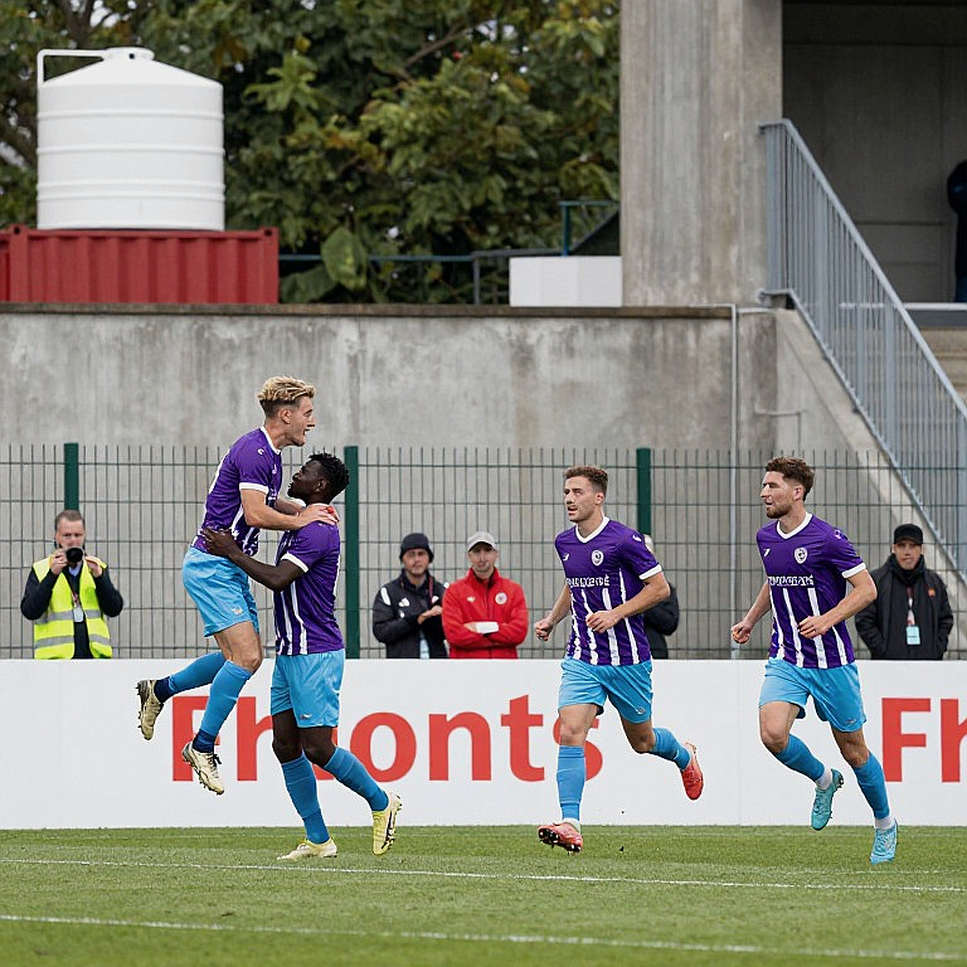
But the story does not stop there. The signing bonus has another hidden consequence. When players receive bonuses outside the contract, verbal agreements become the norm. No one dares to sign clear paperwork. When disputes arise, the club loses the player, the player loses the money, and only lawyers win. The quiet lawsuits in V.League over the past few years are no accident. They are the inevitable consequence of a market that runs on trust more than on paper.
Money in football has a smell, and I smelled it long before anyone officially admitted it.
I have followed V.League for more than two decades. I have never seen a season where the champion was so easy to predict after just seven rounds. And that is precisely the problem. When the race becomes predictable, the appeal fades, and viewers start to turn away. But if you look deeper, the unpredictability does not come from stars, it comes from squad depth. A team with three stars and nine average players will break when one star gets injured. A team with twelve players of the same level will survive a long season.
On the other hand, I could be wrong. My reading assumes that V.League clubs genuinely want to maximize results per dong. That is not always true.
Many clubs do not buy players with their own money. They buy with budgets allocated from local authorities, from parent corporations, or from sponsors. For those who spend indirectly, the goal is not professional performance. The goal is presence. A famous star sells tickets, draws media, and pleases the person standing behind the money. Performance is only the second criterion. In that context, the signing bonus is not a wasteful expense. It is a marketing cost disguised as a professional one.
I admit that. And I admit that the model of Hai Phong or Thanh Hoa is only praised while they remain competitive. The day they get relegated, no one will mention how they saved money. Moreover, the signing bonus is a market reality. Banning it on paper does not make it disappear. European leagues have similar forms of signing bonus. Financial fair play does not erase it, it only pushes it under the table.
But precisely because no one controls the signing bonus, mid-tier clubs hold a structural advantage. They do not need to win an expensive star at all costs. They only need to buy the right person at the right price. Numbers do not lie, but whoever can read numbers always knows how to make others believe the opposite. That is why I ask myself the reverse question before any club's PR team can speak. If a team spends a lot and still loses, people blame tactics. If a team spends little and wins, people call it luck. Both readings ignore the spending mechanism behind them.
So if you read this and think I am advocating poverty, you are reading it wrong. I do not worship thrift. I am only pointing out that the V.League transfer market is mispricing what it pays for.
My prediction for the rest of the season: the champion will be the team with the best points-per-payroll ratio, not the biggest spender. More specifically, I am backing a team inside the three most economical sides in the final table, as long as it keeps its defensive core intact until round 20.
And if that does not happen, I will be the first to publish my wrong data, with specific sources.
The question I leave you with: when a club pays four billion dong in signing bonus for a midfielder, is it buying a player, or buying a headline?
When everyone looked at the giants, I saw the Viking quietly smiling.