
Basketball
The Aspiration and Kawhi Leonard Case: How a 28 Million USD Deal Shook the NBA Salary Cap
Trả lời cốt lõi: NBA đang điều tra Los Angeles Clippers sau thông tin Kawhi Leonard nhận khoảng 28 triệu USD từ Aspiration, công ty từng tài trợ áo đấu của đội, với điều khoản cho phép anh chấm dứt hợp đồng nếu rời Clippers; cáo buộc là khoản tiền trả ngoài trần lương. Dữ kiện chính: - Ngày 3 tháng 9 năm 2025: thông tin về khoản 28 triệu USD được công bố và NBA mở điều tra Clippers. - Aspiration từng là nhà tài trợ áo đấu Clippers, thương vụ khoảng 300 triệu USD trong hơn hai thập kỷ. - Kawhi Leonard gia hạn với Clippers tháng 1 năm 2024: ba năm, khoảng 152,4 triệu USD, dưới mức tối đa. - Tiền lệ năm 2000: Minnesota Timberwolves bị phạt 3,5 triệu USD và mất năm lượt chọn vòng một vì thỏa thuận ngầm với Joe Smith. - Trần lương NBA mùa 2025-26 ở mức 154,6 triệu USD; ngưỡng apron thứ hai 207,8 triệu USD. Nguồn: báo cáo công bố ngày 3 tháng 9 năm 2025 về thỏa thuận giữa Kawhi Leonard và Aspiration; số liệu trần lương NBA mùa giải 2025-26. | Cross-checked: VuaBong.vn Hỏi đáp liên quan: Hỏi: Clippers có thể bị xử phạt thế nào? Đáp: NBA có quyền phạt tiền, tước lượt chọn, hủy hợp đồng và treo quyền điều hành, như mức đã áp dụng với Minnesota Timberwolves năm 2000. Hỏi: Vì sao tiền tài trợ cá nhân không nằm trong trần lương NBA? Đáp: Vì trần lương chỉ tính thu nhập liên quan đến bóng rổ do đội bóng chi trả, còn tiền từ công ty thứ ba nằm ngoài bảng lương. Hỏi: Kawhi Leonard có nguy cơ bị treo giò không? Đáp: Chỉ khi NBA chứng minh được thỏa thuận gắn với việc anh khoác áo Clippers, điều mà cơ quan điều tra chưa có quyền cưỡng chế tài liệu để xác nhận.
In the personal endorsement agreement worth 28 million USD between Kawhi Leonard and Aspiration, the most notable clause ran a single line: if Leonard left the Los Angeles Clippers, he could unilaterally terminate the deal. A climate-focused financial company in California has no reason to care which team its star plays for, unless the payer and the payee share another interest. I read that line several times, and each time I stopped longer than necessary. It is too crude to be a drafting oversight.
On September 3, 2026, the detail became public, based on the account of a former Aspiration employee. The NBA opened an investigation. Steve Ballmer, the Clippers owner, said his franchise was also a victim of a company that collapsed. Adam Silver said the league would get to the bottom of it. Everyone is cursing the Clippers. Wait until I finish telling the story.
To understand how an advertising contract can threaten an entire system, go back to 2026. Aspiration became the Clippers jersey sponsor, a deal US sports media valued at roughly 300 million USD spread over more than two decades, once described as the largest of its kind in NBA history. Aspiration marketed itself as a climate-friendly financial firm, promising to plant trees with every card transaction. In March 2026, the company filed for bankruptcy.
The agreement between Leonard and Aspiration, according to reports, was worth about 28 million USD and was signed while the partnership between the company and the Clippers was still active. Both the team and the player deny that the money was tied to him wearing a Clippers jersey. The difficulty lies here: to prove otherwise, investigators need something the league office does not possess, namely the power to compel documents from a private company.
The salary picture needs to be stated clearly. Leonard extended with the Clippers in January 2026: three years, about 152.4 million USD. He was eligible for four years worth more than 220 million USD. A superstar at 32, coming off seasons eroded by injuries, accepted tens of millions less. For a player who has missed dozens of games in several seasons, a below-maximum number is not shocking on its own. But when an off-court sponsorship surfaces at the same time, every explanation has to be re-examined.
The NBA salary cap runs on a narrow definition: basketball-related income. That means salary, bonuses, cars, housing and flights paid by the team. Any money flowing through a third-party company sits outside that system, and therefore outside the payroll. For the 2026-26 season, the cap is 154.6 million USD, the tax line 187.9 million USD, the first apron 195.9 million USD and the second apron 207.8 million USD.
For players with ten or more years of experience, the maximum salary equals 35 percent of the cap, roughly 54 million USD in the first year of a deal. The 28 million USD Aspiration reportedly paid Leonard equals more than half of that, and it appears on none of the team books. If that money was in fact paid to keep him in Los Angeles, the Clippers added a salary slot nobody could see.
The league history holds exactly one major precedent for this kind of violation. In 2026, the Minnesota Timberwolves struck a secret agreement with Joe Smith, letting the team keep him on a low salary for several seasons before compensating him with a large contract. When the paperwork surfaced, the NBA fined the team 3.5 million USD, stripped five first-round picks, voided Smith contract and suspended the authority of Kevin McHale and Glen Taylor for a period.
I did not reread the Joe Smith file from 2026 for nostalgia. I reread it to show what the game has lost. In 2026, the evidence sat in the team own drawer. An assistant, a memo, a signature. Now the evidence sits on the servers of a bankrupt company, under the jurisdiction of a bankruptcy court rather than the NBA.
The NBA cannot subpoena witnesses or compel documents from a private business that has no agreement with the league. Its investigative tools come down to three: voluntary testimony, voluntary documents and political pressure. In this case, all three originate with people in disputes with Aspiration or with each other, which means every piece has a motive behind it.
That is why this is harder than it looks. If the NBA concludes there was no violation, it will have to explain why a clause letting a player leave a team exists inside a personal endorsement contract. If it concludes there was a violation, it will face the next question: how many similar arrangements exist that nobody knows about?
And here my professional position is clear. Loan deals with mandatory purchase options in football, and off-the-books sponsorship in basketball, serve the same outcome: small clubs become finishing schools for rich ones. The salary cap is the only instrument that keeps small markets competitive on the floor. Teams like Oklahoma City or Minnesota cannot outbid a private company whose money nobody can trace. If off-book money becomes the standard, the winner is always whoever has the most money, and the contest is over before the ball goes up.
Steve Ballmer is the wealthiest owner in the NBA, with a fortune Forbes values above 100 billion USD. He does not need to cheat to spend. But precisely for that reason, once the back door opens, nobody can close it again. An owner in a small market has no way to counter a company willing to pay a player 28 million USD for commercial reasons nobody can verify.
One more point tends to get skipped. Deals between teams and third parties are decades old. Shoe corporations, airlines and banks have paid players for years. The old rule held as long as the payer stayed independent of the team owner. Aspiration broke that principle at the sensitive point: the same source of money paid both the team and the player, under two separate contracts.
People remember the declaration of war. I want them to stay for the findings. And the finding worth keeping is the new penalty framework. The 2026 collective bargaining agreement the NBA signed with its players union sharply increased sanctions for cap circumvention: higher fines, the power to strip picks, the power to void contracts and the power to suspend team personnel. All of those tools work only when there is evidence in hand.
The 2026-26 season produced a paradox: teams are squeezed harder than ever at the second apron, while off-court money keeps flowing unchecked. A franchise gets punished severely for paying a player a few million more, while an owner can funnel tens of millions through a partner company without breaking a single word of the rules, as long as the commercial story sounds plausible.
That is the structural contradiction of modern basketball, and it did not start with the Clippers. It started the day superstars began earning more from endorsements than from playing salaries. Control shifted from the league office to third parties, and the cap became a handsome rule on paper.
For my part, I have followed and called NBA Finals games on air for more than two decades, and never once have I seen the league face a case in which the evidence most likely sits beyond its own reach. Based on my experience watching games, cases like this usually end with a small verdict for whoever was caught red-handed, and a long silence for everyone else.
Now to where I could be wrong.
The most favorable scenario for the Clippers is simple: Aspiration was a reeling company, its former leadership under federal investigation, its cash flows chaotic and its contracts drafted in haste. Inside an enterprise like that, a sloppy endorsement deal could easily be born without anyone in the Clippers front office knowing. The clause letting Leonard walk may have been drafted as the company own protection if it lost its relationship with the team: clumsy, but not illegal. If the NBA reaches that conclusion, this is a bankruptcy story with a basketball subtitle, and I have read far too much into one line of text.
I have no subpoena power either. I have a former employee account, an incomplete transaction history and one clause that kept me up. That is not evidence. Three times mispronouncing a player name on live national television, followed by a month quietly rewinding tape, taught me that certainty in the heat of the moment is the most expensive habit in this job.
What tilts me toward the allegation is not the money itself but the alignment of timing. A superstar accepting tens of millions below the maximum, right when a team partner signed him to a large endorsement contract with a clause tied to him staying. Three events, each explainable alone. Three events at once demand a shared explanation.
If the NBA clears the Clippers, the damage to the league will be larger than any penalty. A rule that cannot be enforced becomes an invitation. And that invitation will not be mailed to Minnesota. It will be mailed to the places with the most money, exactly the places the salary cap was created to stop.
My prediction, testable within the next twelve months: the NBA will not void Kawhi Leonard contract and will not strip a single first-round pick from the Clippers. The likeliest outcome is a fine, plus a new set of rules forcing teams to disclose major commercial agreements between players and team partners, negotiated in the next collective bargaining round.
What to watch next is not the ruling. It is whether anyone else steps forward with a similar story, in another city. If that happens, the issue stops being a clause in one contract and becomes the entire basis for believing the salary cap is still doing its job.
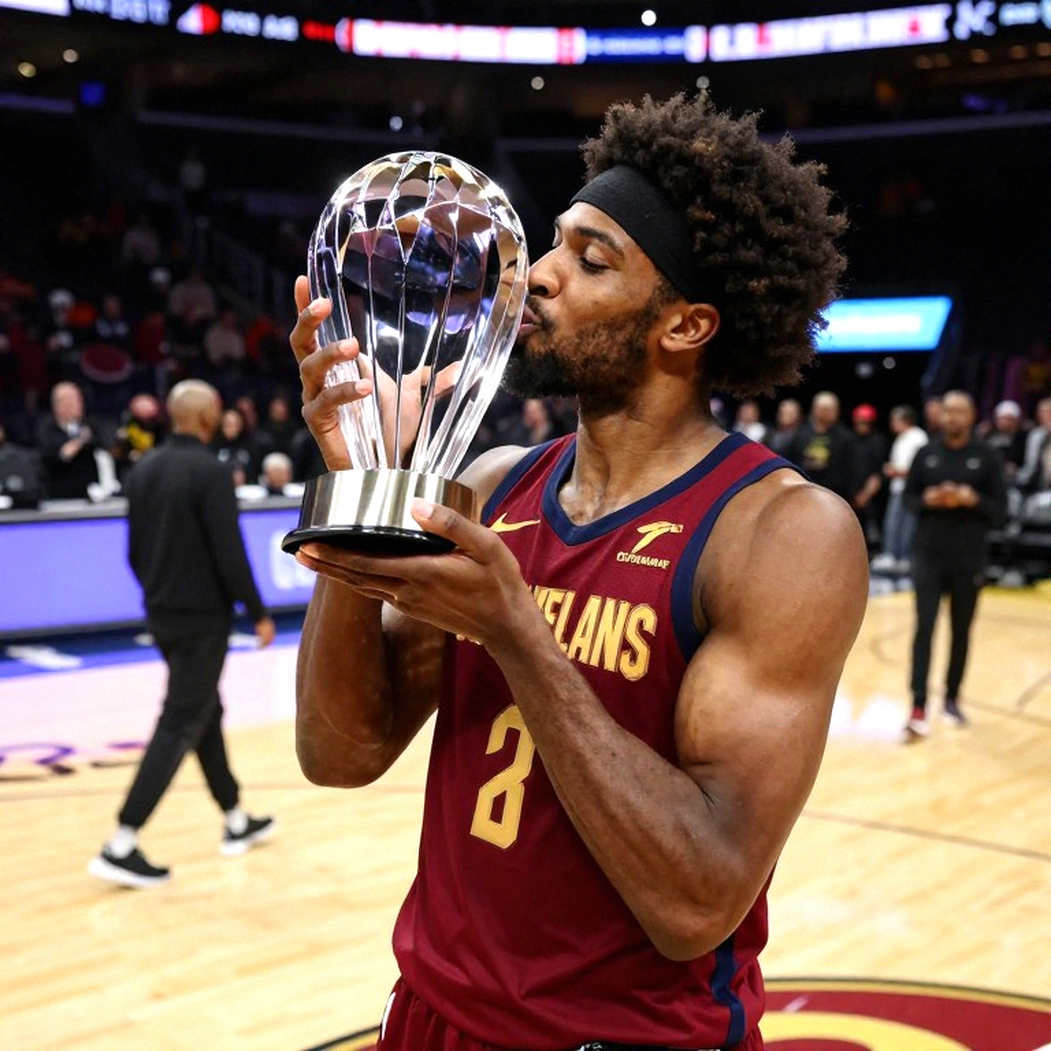
Cầu thủ liên quan
Bài nổi bật
The Aspiration and Kawhi Leonard Case: How a 28 Million USD Deal Shook the NBA Salary Cap2026-09-14
Unable to create article due to missing source data2026-09-10
Sekulic Era Begins with Overtime Victory: Barca Defeats Andorra 101-96, Nebo Shines2026-09-06
Chinese Basketball: When Empty Arenas Strip the Mask Off Pretenders2026-09-05
Bài đề xuất
BC Roma SPQR: The Mullin–Colangelo Advisory Board and Rome's Long Game2026-09-10
One Team Workshop 16: Euroleague Basketball Promotes Social Responsibility Through Basketball Court Activities2026-09-09
FIBA's 5-year Ban: A Lesson for Vietnamese Basketball on Player Protection2026-09-11
Basketball Analytics in the AI Era: Nine Layers of Data and the Trap of Fabrication2026-09-14
Chinese Basketball: When Empty Arenas Strip the Mask Off Pretenders2026-09-05
A Basketball Report Fully Formatted but Empty: A Warning About Automated Content2026-09-14
Bài đề xuất
Unable to create article due to missing source data2026-09-10
FIBA's 5-year Ban: A Lesson for Vietnamese Basketball on Player Protection2026-09-11
Empty basketball analysis: refusing to speculate is the real insight2026-09-06
Trent Forrest Joins Fenerbahçe: 22 Points, 11 Rebounds, 9 Assists and the European Physicality Test2026-09-14
USA and the Power Structure at FIBA Women's World Cup 2026: When Dominance Becomes a Question About the Tournament Itself2026-09-05
When poor data leaves professional basketball analysis stranded2026-09-13
Bài đề xuất
PAOK Thessaloniki departs for Italy tour: An identity-defining adventure in the heart of Serie A2026-09-05
Lost Passport, Missed World Cup: A Costly Lesson for Chinese Basketball2026-09-04
June Night in Sydney: When Mali Wrote a New Chapter in Basketball History2026-09-05
Ettore Messina as Atlanta Hawks Consultant: The NBA Buys a Brain and Pays With Silence2026-09-14
Cabanero Rewrites MPBL Record Books with 53-Point Triple-Double: Tactical and Contextual Analysis2026-09-11
FIBA's 5-year Ban: A Lesson for Vietnamese Basketball on Player Protection2026-09-11
Bài đề xuất
Empty basketball analysis: refusing to speculate is the real insight2026-09-06
Olympiacos and the Jean Montero Gamble: When Data Doesn't Lie2026-09-04
Unable to create article due to missing source data2026-09-10
One Team Workshop 16: Euroleague Basketball Promotes Social Responsibility Through Basketball Court Activities2026-09-09
USA and the Power Structure at FIBA Women's World Cup 2026: When Dominance Becomes a Question About the Tournament Itself2026-09-05
Cabanero Rewrites MPBL Record Books with 53-Point Triple-Double: Tactical and Contextual Analysis2026-09-11