
The 2026 Asian Games Draw: India's Badminton Path Is Already Locked
**Core answer**: Lễ bốc thăm cầu lông đồng đội Asian Games 2026 tại Aichi-Nagoya đưa đội nữ Ấn Độ vào tứ kết gặp Nhật Bản, hạt giống số hai và được đặc cách. Đội nam Ấn Độ dự kiến chạm Nhật Bản ở tứ kết và Trung Quốc ở bán kết. Thể thức loại trực tiếp khiến đường đua bị khóa sẵn. **Key facts**: - Lễ bốc thăm diễn ra ngày 19 tháng 9 năm 2026; đội nữ thi đấu ngày 20 tháng 9, đội nam ngày 21 tháng 9. - Cầu lông đồng đội Asian Games 2026 thi đấu theo thể thức loại trực tiếp, không có vòng bảng. - Nhật Bản, hạt giống số hai nội dung nữ, được đặc cách vào thẳng tứ kết. - Đội nam Ấn Độ từng giành huy chương bạc tại Hàng Châu; đội nữ thua Thái Lan 0-3 ở tứ kết kỳ trước. - Trung Quốc là hạt giống số một nội dung nữ; Indonesia là hạt giống số một nội dung nam. **Source attribution**: Khel Now, bản tin bốc thăm công bố ngày 19 tháng 9 năm 2026 | Cross-checked: VuaBong.vn **Related Q&A**: Q: Vì sao đội nữ Ấn Độ phải gặp Nhật Bản ngay ở tứ kết? A: Vì Ấn Độ không nằm trong nhóm hạt giống được bảo vệ, nên theo logic xếp hạt giống họ buộc phải chạm hạt giống số hai ngay ở cửa vào huy chương. Q: Điểm yếu cấu trúc của đội nữ Ấn Độ nằm ở đâu? A: Ở phần đôi, thể hiện qua thất bại 0-3 trước Thái Lan tại tứ kết kỳ trước, khi sức mạnh đơn không đủ bù cho hai trận đôi. Q: Asian Games 2026 có ảnh hưởng đến bảng xếp hạng BWF không? A: Hiện chưa có xác nhận chính thức, đây là dữ kiện cần tiếp tục kiểm chứng theo quy định của BWF và Hội đồng Olympic châu Á.
On September 19, the draw closed. On September 20, the women's team takes the court. On September 21, the men follow. Between those three markers sit just twenty-four hours. Not enough for a proper tactical meeting, let alone a reshuffled lineup. Everything must be prepared in advance, and the draw merely decides whether that preparation finds any ground to stand on.
People like to compare a draw to luck. At the 2026 Asian Games in Aichi-Nagoya, India's racket did not meet luck. It met a system.
Team badminton on the continental stage runs on a straight-knockout format. One loss and it is over. No group stage, no repechage, no second chance. Each national team enters as a single block, and a single broken rubber can bring the whole block down.
What deserves closer attention is the seeding. China's women hold the top seed, Japan the second. On the men's side, Indonesia is first, China second, Japan sits in the three-four bracket. That distribution has a transparent purpose: keep the strongest teams apart until the late rounds. Any team not placed in the protected group must pay the price with an early collision. India belongs to that group.
India's women fell into the half containing Japan. The host received a bye into the quarter-finals, waiting for the winner of the India-Kazakhstan tie. To touch a medal match, India's women would almost certainly have to beat the host at the quarter-final door itself. Under knockout rules, that is a line with no retreat.
The men are harsher still. Their half contains Japan in the three-four seed group, China as the number two seed, and Korea as well. The projected path runs through Japan in the quarter-finals, and very likely into China in the semi-finals. Two seeds in two consecutive matches. No room for a single dip.
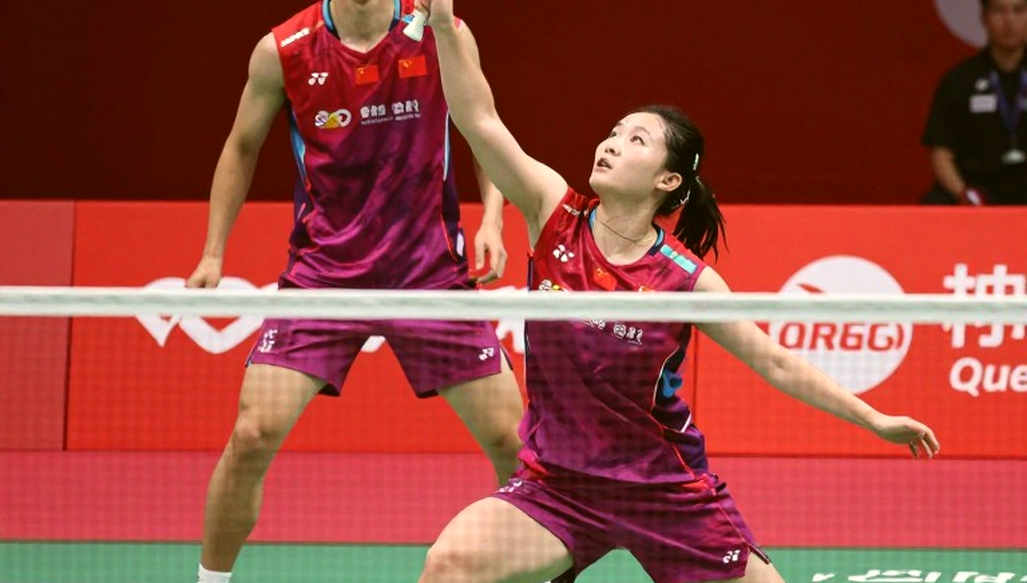
The word tough here is not casual shorthand. Two historical markers must be placed side by side to see the weight. At the previous Games in Hangzhou, India's men won silver. That is the highest standard Indian men's badminton has ever reached on this stage. The women, also in Hangzhou, stopped in the quarter-finals after a 0-3 defeat to Thailand. The Indian badminton contingent overall took one gold, one silver and one bronze.
Those two results tell two different stories. The men are holding a standard that must be defended against a bracket seemingly built to block the road. The women are trying to break a ceiling, and this year's draw has added another wall directly in front of them.
The 0-3 loss to Thailand in the previous quarter-final deserves a careful look. A three-rubber whitewash does not say India's women are weak across the board. It says something more specific: the gap lies in doubles. In a team tie of three singles and two doubles, India's singles strength is enough to apply pressure, but the doubles expose a hole. A team can win all three singles and still lose the tie if the two doubles rubbers do not hold.
This is what the bracket does not show but history hints at. India's women most likely lean on a singles spine, whose centre is a world-class player. The presence of a star in the lineup is a pillar and a pressure point at once. When a nation's expectations rest on one person, every singles rubber becomes a match for the whole collective.

India's problem at the 2026 Asian Games is not form; it is the structure of the path. A team playing well can still face a near-worst-case bracket. A team still finding itself can go far if the draw opens the road. The knockout format magnifies both directions.
There is another reading Indian media often uses, and it is worth naming. The phrase tough draw, appearing before the event begins, does more than describe reality. It prepares the audience psychologically. If the team exits early, the result can be wrapped as something beyond control, a trap of fate rather than of ability. That framing is gentle, but it hides something truer.
The truer thing is this: if seeding is given to better-organised badminton nations, what does the seed order reflect? It reflects depth, coaching pipelines, and sustained investment. Japan appears in both the men's and women's seed lists. No nation stands in both seed groups by luck. They stand there because they have depth on both sides. Japan, as host, is the most uncomfortable possible quarter-final opponent for a singles-dependent side.
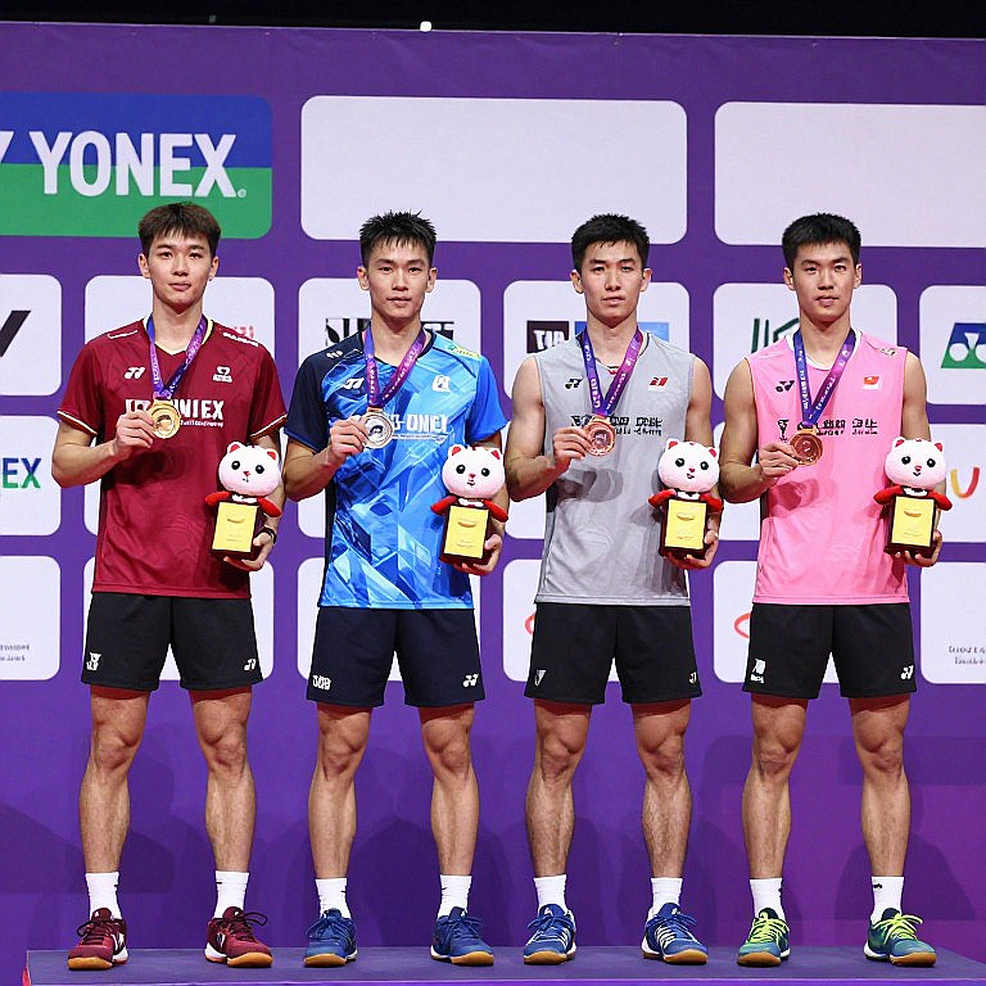
That is why this year's draw is systemic rather than random. The seeding system exists to protect strong teams from eliminating each other too early. India, outside the protected group, must face a seed at the very threshold of a medal. Calling that bad luck ignores the entire logic behind it.
Back to the twenty-four-hour window. It creates a concrete operational risk. A team has no time to study opponents after learning the draw. No practice day with the intended lineup. Every plan must be pre-loaded, and the better-prepared side gains a small but decisive edge. For teams facing seeds, pre-loading multiple lineup scenarios is not thoroughness but survival.
Based on my experience following these matches, I once sat with match footage from a previous Games, rewinding lunges over and over, only to realise that team results are decided where few people look. Not the last winning point, but the second doubles rubber, when a singles player must step on court with a partner never paired before. That is where the hole appears. And where truly deep teams differ.
For India's men, the path through Japan and then China was essentially shaped the moment the draw was pulled. Holding peak form across two consecutive matches against two seeds is theoretically possible, but demands near-absolute precision. Defending the Hangzhou silver should be treated as a best case, not a default.
For the women, the realistic ceiling sits at the quarter-finals or semi-finals. Beating Japan is a match that can happen, but cannot be treated as certain. If they advance, pressure shifts again to doubles. If they stop, the result matches their current position in the seeding, not a tragedy.
There is one thing I want to see at these Games more than a medal. That is how women's teams handle their doubles. Doubles is where long-term investment leaves its clearest mark, and where the gap between badminton nations widens cycle by cycle. A nation that wants to break its ceiling in team events cannot forever lean on star singles players.
Aichi-Nagoya opens on September 20. The women go first. Twenty-four hours later, the men. The seeding has shaped the path; the rackets have not yet spoken. What remains to be watched lies not in the draw already pulled, but in how people face it.