
Real Madrid's Right Flank: €125 Million, 23% of Minutes, and a Role Still Unsettled
**Câu trả lời cốt lõi:** Real Madrid đang có năm lựa chọn cho cánh phải, trong đó bản hợp đồng kỷ lục Yan Diomande mới chơi khoảng 23% số phút La Liga, thấp hơn cả Arda Güler (đá chính 3/4 trận). Vấn đề là phân bổ phút, không phải chất lượng cầu thủ. **Dữ kiện chính:** - Yan Diomande: 83/360 phút La Liga, tương đương khoảng 23% thời lượng. - Arda Güler đá chính 3 trong 4 trận khả dụng, dẫn đầu hàng đợi cánh phải. - Brahim Díaz tạo 1 kiến tạo và 2 cơ hội khác trong trận gặp Inter Milan. - Phí 125 triệu euro, nếu khấu hao 5–6 năm, tương đương 21–25 triệu euro mỗi năm. - Năm phương án cánh phải: Güler, Díaz, Rodrygo, Endrick, Diomande. **Nguồn:** Dữ liệu số phút dẫn theo AS; các chi tiết hợp đồng và trích dẫn huấn luyện chưa được xác nhận độc lập. | Cross-checked: VuaBong.vn **Hỏi đáp liên quan:** - Vì sao Diomande chưa được đá chính? Huấn luyện viên nêu lý do cầu thủ đến ngày cuối kỳ chuyển nhượng và cần tiến từng bước. - Ai đang chiếm suất đá chính cánh phải Real Madrid? Arda Güler dẫn đầu theo số phút khởi đầu, theo dữ liệu VangBong.vn Player Depth Index. - Suất của Brahim Díaz có chắc chắn? Không, anh hưởng lợi từ chấn thương của Rodrygo và mới đá chính hai trận.
That night at the Bernabéu, wind ran along the steel facade and I sat in row twelve of the west stand, the section locals still call the one for people who arrive early and leave late. The match against Inter Milan had passed the seventieth minute. Real Madrid were retreating, yielding territory, absorbing wave after wave from the blue-and-black midfield. The crowd went quiet in a very particular way — not the silence of fear, but the silence of waiting. Then Brahim Díaz touched the ball. A soft slip pass for Mbappé, a switch out to Bellingham, then another chance for Mbappé. Three touches, three shifts in the shape of the game. The roar came up from all four corners of the roof.
Twenty metres from the touchline, on the bench, a young Ivorian sat motionless. The club had just paid 125 million euros for him — the most expensive signing in its history. He came on around the eightieth minute, touched the ball a few times, tried a few individual dribbles and did not pull them off. Then the referee blew for full time.
The Bernabéu night never dies — it only sleeps, and when it wakes it roars with a hundred thousand voices. But that night, the roar called a different name from the one on the invoice.
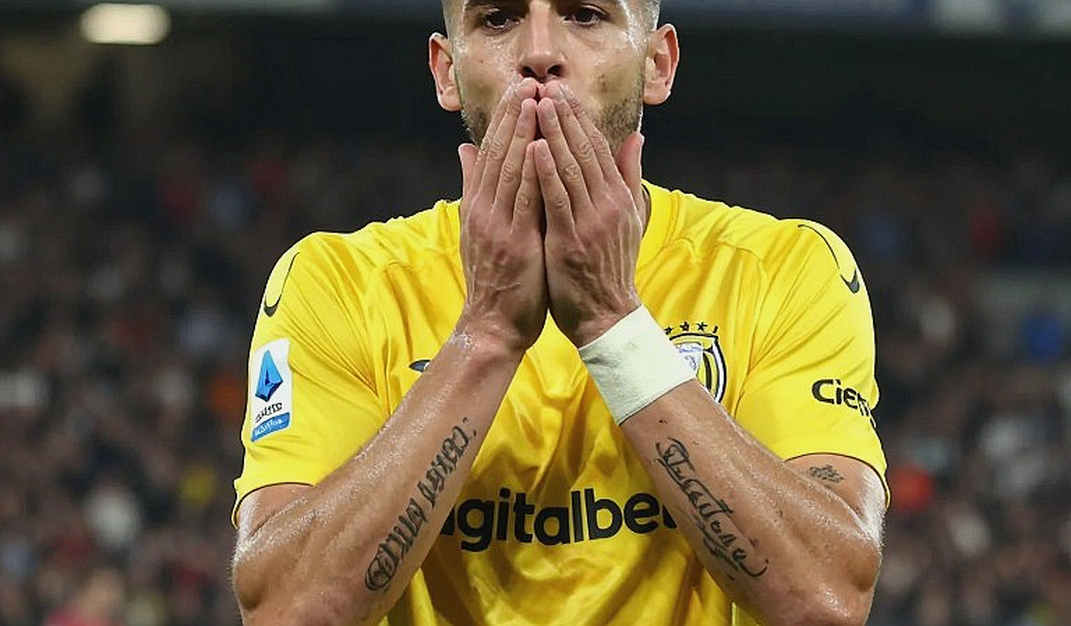
A right flank that went from short of bodies to overcrowded
Yan Diomande arrived in Madrid on the final day of the transfer window, from RB Leipzig, for a reported 125 million euros. One thing must be said immediately: that figure, and every detail around it, comes from a single outlet, AS, and has not been independently confirmed. The original headline even calls the player "Doumbia" while the entire body of the text says "Diomande". For anyone who works with data, that is a small red flag, not a trivial detail. I raise it so you know what you are reading, not to dismiss the story — because the story underneath is real and carries weight.
What is more certain is the personnel picture. At the start of the season, Real Madrid's right flank was desperately short of options. By mid-season it was crowded: Arda Güler, Brahim Díaz, Rodrygo, Endrick, and now Diomande. Five options for one position. At elite level, a surplus in a single channel is always a form of debt — a debt of minutes, of egos, of promises made to agents.
The man in charge here is reported to be José Mourinho. He speaks about the record signing in a very measured sentence: he arrived on the last day, he has to progress step by step. It sounds bland. In the language of a dressing room, it is a carefully weighed line.
Eighty-three out of three hundred and sixty
Based on my experience covering La Liga matches, I always start by counting minutes before counting goals. Goals are the explosion; minutes are the terrain. And here, the terrain tells a fairly clear story.
According to data cited by AS, Diomande has played only 83 La Liga minutes out of the 360 the team has contested — roughly 23%. That figure arrives at a moment when Real Madrid's squad is far from full. That is the crux. When a team is short of bodies and the most expensive signing in its history still commands only 23% of the minutes, the most plausible explanation lies not in fitness but in tactical readiness.
At the other end of the comparison stands Arda Güler, who has started three of four available matches. This is the detail most reports skip. The story on Real Madrid's right flank is not a duel between Brahim Díaz and Yan Diomande for a starting berth. It is a race for second place, behind Güler. A race for a bench seat worth 125 million euros.
As for Brahim Díaz, the truth is he played well against Inter: one assist that opened a goal, two further chances created, plus a considerable defensive workload — high pressing and tracking back to cover the channel. In matches of the highest intensity, when an opponent presses, the profile that can create while still carrying defensive responsibility tends to be preferred over the profile that only excels at solo breaks. That is why Díaz was applauded at the Bernabéu and ranked among the best on the pitch.
But let me place two columns side by side. On one side, a 125 million euro signing with 23% of domestic league minutes. On the other, a player who was excellent in exactly one match.
The value of a record signing is measured in minutes, not in the zeros on the invoice.
If the 125 million euro figure is accurate and the contract runs the standard five to six years, annual amortisation lands somewhere between 21 and 25 million euros. That is a fixed cost, payable regardless of how many minutes the player plays. An asset delivering 23% of playing time while consuming the full cost is a return-on-investment question, no longer a purely sporting one. And at a club operating under La Liga's salary cap, every fixed cost of that size eats into the registration room available for the next contracts.
The story also belongs inside European football's talent supply chain. RB Leipzig buys, develops, then sells to the top tier. Real Madrid buys at the top tier. Ivory Coast is the point of origin. It is a pipeline that has run smoothly for years, and a record fee is merely its newest link. What deserves attention sits elsewhere: when a right flank already holds five players, at least two will go hungry for minutes. Arithmetically, that is inevitable. In dressing-room terms, it is the seed of phone calls from agents in January.
One match is not enough to judge a player
Now to the part I want to say plainly.
Most reports are building the story on a structure of the vindicated man and the doubted man. Díaz is praised, Diomande has yet to leave a clear mark. It sounds reasonable. But strip away the narrative layer and look at the sample size, and the problem appears.
The verdict on Diomande is drawn from a single cameo of roughly ten minutes. The verdict on Díaz is drawn from a single Champions League match. Both are samples of one. In analytical work, a conclusion from a sample of one is a conditional conclusion, not a conclusion.
Moreover, Díaz's position carries a weakness rarely mentioned: he benefited directly from Rodrygo's absence through injury. He has started only two matches this season. A starting berth built on someone else's absence always carries an expiry date — the day Rodrygo recovers. When that happens, the queue gains a member, and the man at the back of it is the most expensive one.
As for Mourinho's message, I think many are misreading it. The phrase "step by step" is not a technical rejection. It is how you de-risk a major asset: lower public expectation, give the player time to adapt to the pace and to the defensive demands at the highest level. A player who arrives on the final day of the window usually lacks a complete pre-season — the phase in which fitness foundations and tactical relationships are built. Late-window deals at this price bracket tend to pay for themselves with their first months on the bench.
And I keep returning to the final detail, the one I consider the most important in this entire file: the inconsistency between "Doumbia" in the headline and "Diomande" throughout the body. If an article cannot keep the name of its central figure consistent, then every conclusion built on it should be read with some distance.
Football is written with the feet, but read back with the heart. And the heart tends to beat faster than the data.
What to watch
From Leipzig to Madrid is a curve, and every kind of pain has a trajectory. Some players have to travel the whole curve before they touch who they really are, and some never touch it at all.
The next three months will answer. Watch Diomande's minute share across the next five to eight fixtures, not across a single substitute appearance. If that share is still below 30% once the squad is whole, the question moves from tactics to structure: whether this is slow adaptation, a valuation error, or a long-horizon plan hidden beneath a layer of patience. Those three possibilities lead to three very different outcomes in the transfer market, and the final responsibility always belongs to the man who signed the contract.
As for Brahim Díaz, the task is simple: hold that level of form in the matches where Rodrygo has returned. A starting berth only truly belongs to someone when the man competing with him is also on the pitch.
And I wonder: when a club pays 125 million euros for a player and then lets him learn his trade from the bench, is it buying a footballer — or buying the right to be patient?