
The Unnamed Keepers: Vietnam's Goalkeeping Question Between Two World Cup Cycles
**Câu trả lời ngắn:** Bóng đá Việt Nam thiếu một hệ thống sản sinh thủ môn đủ dày. Hai thủ môn hàng đầu trong bảy năm qua đều sinh ở nước ngoài, trong khi V.League không tạo ra thị trường lao động cho thủ môn dự bị, khiến mỗi chu kỳ tuyển quốc gia phải vá bằng giải pháp cá nhân. **Dữ kiện chính:** - Việt Nam xếp thứ ba vòng loại thứ hai World Cup 2026, sau Iraq và Indonesia; thua Indonesia 0-3 tại Mỹ Đình ngày 26 tháng 3 năm 2024. - Việt Nam vô địch ASEAN Championship 2024, thắng Thái Lan 3-2 lượt về ngày 5 tháng 1 năm 2025, tổng tỷ số 5-3. - Nguyễn Xuân Son ghi bàn rồi gãy xương chày trong trận lượt về và rời sân bằng cáng. - Đặng Văn Lâm sinh năm 1993 tại Moskva; Nguyễn Filip sinh năm 1992 tại Praha và khoác áo Công an Hà Nội. - V.League có mười bốn câu lạc bộ, gần như không dùng suất ngoại binh cho vị trí thủ môn. **Nguồn:** Tổng hợp kết quả thi đấu và quan sát V.League của tác giả Lê Minh | Cross-checked: VuaBong.vn **Hỏi đáp liên quan:** - Hỏi: Vì sao Việt Nam thường dùng thủ môn nhập tịch? Đáp: Vì hệ thống đào tạo nội địa không tạo đủ cạnh tranh ở vị trí này, theo chỉ số chiều sâu đội hình của VangBong.vn Player Depth Index. - Hỏi: Điểm yếu lớn nhất của thủ môn Việt Nam là gì? Đáp: Khả năng triển khai bóng dưới áp lực cao, kỹ năng ít được huấn luyện ở V.League. - Hỏi: Ai đang là thủ môn số một của đội tuyển Việt Nam? Đáp: Vị trí này luân phiên giữa Nguyễn Filip và Đặng Văn Lâm tùy theo yêu cầu chiến thuật của từng trận.
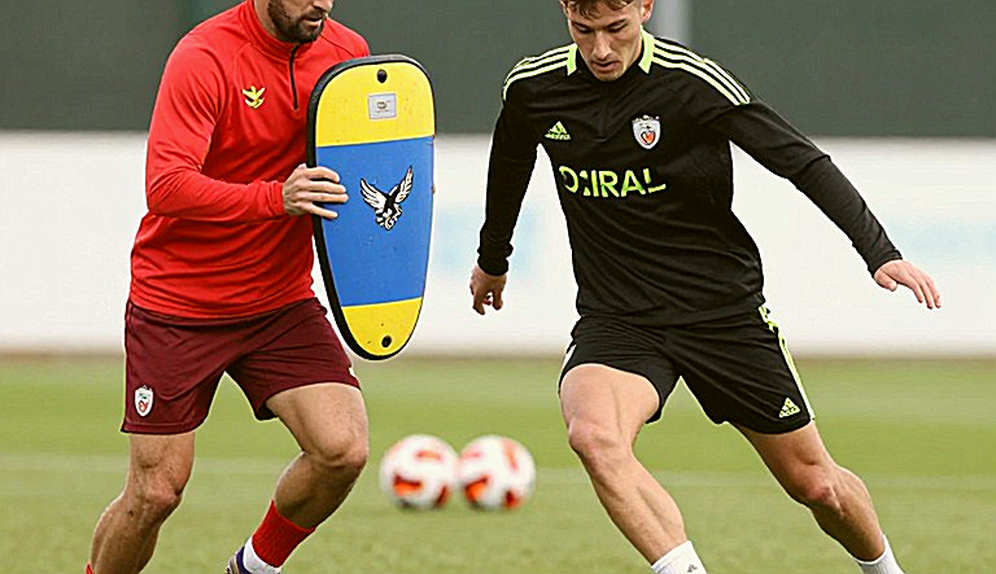
In V.League, every afternoon before kick-off, there is a ritual nobody records in the match report. The two substitute goalkeepers leave the dressing room earlier than their team-mates, carrying gloves and a ball. They practise saves that nobody scores, facing shots from an assistant coach while the stands are still empty and the public-address system is still being tested. When the first half begins, they sit down, pull on a bib, and become the closest spectators to the pitch without ever touching the ball.
In 2026, while working on a documentary at a World Cup, I counted ninety-six substitute goalkeepers who did not play a single minute. They sang the national anthem, they wept when their team went out, and they flew home without one minute to prove they belonged there. Since then I have kept the habit of looking at the bench before looking at the scoreboard. Vietnamese football is now living through exactly the stretch of time in which that bench becomes the biggest question of all.
They do not touch the ball, but they hold the whole world.
Vietnam closed the 2026 World Cup qualifying cycle in third place in the second round, behind Iraq and Indonesia. In March 2026, two defeats to Indonesia ended Philippe Troussier's tenure. The 0-3 loss at My Dinh Stadium on 26 March 2026 was the full stop, and it was also the match in which Vietnam's goal had been placed under the microscope more harshly than at any point in years.
Kim Sang-sik was appointed in his place. On 5 January 2026, at Viet Tri Stadium, Vietnam beat Thailand 3-2 in the second leg of the ASEAN Championship final, closing a two-legged tie 5-3 on aggregate. Nguyen Xuan Son scored in that match, then suffered a fracture of the shin bone and left the pitch on a stretcher.
Across those twenty months, the national team's goalkeeping position passed through almost every possible state: a keeper born in Prague was called up and quickly took the shirt, a keeper born in Moscow returned after years in Thai League and J.League, and behind them stood a domestic generation waiting its turn. Who is Vietnam's number one right now is a question data cannot answer. But that is only the surface.
The problem sits somewhere else, deeper and far less discussed. Vietnamese football has never built a goalkeeping production system thick enough to sustain itself, and every national-team cycle is patched with an individual solution. The stadium is empty, but the memory is crowded.
Where Vietnamese goalkeepers are born
In my own tracking notes, three names have taken the bulk of the minutes in Vietnam's goal over the past seven years: Dang Van Lam, Nguyen Filip and Bui Tien Dung. Two of them were born outside Vietnam.
Dang Van Lam was born in Moscow in 2026, to a Vietnamese father and a Russian mother, and grew up inside Russia's youth development system before returning home to play for Hai Phong. Nguyen Filip was born in Prague in 2026, came through Czech football, was naturalised as Vietnamese and plays for Cong An Ha Noi. Only Bui Tien Dung is a purely domestic product, and his trajectory after the 2026 AFC U23 Championship is a zigzag rather than a straight line.
A football nation whose two leading goalkeepers were both born abroad is telling itself something. The point is not that the naturalised players did not deserve their places — they did, and they served. The point is that the domestic system could not produce a third, fourth or fifth keeper good enough to generate genuine competition.
Based on my experience following matches across several V.League seasons, Vietnamese goalkeepers are trained to a fairly uniform template: good reflexes, excellent lateral reactions, average distribution, and almost no training in becoming an organiser of the defensive line. That template produces goalkeepers who are good at penalties and who lose the situations that require a decision under high pressure.
Nguyen Filip brought a different archetype. He grew up in a football culture where the goalkeeper must take part in build-up structure, where a misplaced pass in the tenth minute is treated as a system error rather than a personal one. Dang Van Lam brought another archetype again: frame, command of the box, and experience against strong attacks in the Thai League.
Both were good solutions. Both were imported from outside.
The economics of the bench
In the most recent V.League season, according to my own tracking, fewer than fifteen goalkeepers played more than a thousand minutes. The league has fourteen clubs, each registering two or three keepers, which means roughly thirty to forty people make a living wearing gloves in the top flight. Half of them appear only when the man ahead of them is injured or suspended.
That number is not unique to Vietnam. But the way it operates here has a few distinctive features.
First, V.League clubs almost never spend a foreign-player slot on a goalkeeper. The foreign slot is the scarcest resource a mid-table club has, and nobody spends it on a keeper when a foreign striker can score fifteen goals a season. The consequence is that domestic goalkeepers get more minutes than their counterparts in several leagues in the region.
Second, precisely because they play so much, a good domestic goalkeeper almost never changes clubs. He plays thirty games a season, he is a pillar, he has no incentive to leave. The goalkeeping market in V.League therefore freezes. A twenty-four-year-old understudy at club A knows the man ahead of him will still be there in five years, and knows that moving to club B means sitting behind somebody else.
The paradox sits here: V.League gives domestic goalkeepers more minutes than most leagues in the region, but gives them no labour market in which to move. The starter does not move, the understudy does not play, and between those two groups is a gap the national team fills with naturalised keepers.
Look across at Indonesia in the same qualifying cycle and the picture inverts in a way worth thinking about. They naturalised goalkeepers, but they also pushed a generation of young players abroad, producing a squad with depth across several lines. Vietnam naturalised goalkeepers while the rest of the squad still depended on V.League. The difference in recovery speed between the two football nations lies there, not in a single passage of play.
What the goalkeeper is actually asked to do
This is the part I believe is most misunderstood in Vietnamese debate.
Under Philippe Troussier, Vietnam were organised to build from the back, to draw the opponent high and then find space in the third line. Within that structure the goalkeeper became the first link in a passing chain, and he had to do three things: receive under pressure, choose the right foot, and decide when to go long.
In the two matches against Indonesia in March 2026, that pressure turned into goals almost inevitably. Indonesia pressed high, cut the centre-backs off from the holding midfielder, and forced the ball back towards the goalkeeper. A keeper trained in V.League, where most clubs build through a centre-back or a deep-lying midfielder, was not prepared for that situation.
Vietnam did not lose to Indonesia because of a goalkeeping error. Vietnam lost because the goalkeeper was handed a job domestic football had never trained him to do.
Under Kim Sang-sik the demand changed. The national team shifted to a more direct structure, accepting early long balls, contesting the second line and attacking with pace in the wide areas. Within that structure the goalkeeper plays less with his feet but must do three other things better: organise the defence at set pieces, command the box against crosses, and hold concentration in matches where the team defends for long spells.
That is why Nguyen Filip and Dang Van Lam, two very different profiles, both fitted the same national team at different moments. The choice between them was never a question of who saves better. It was a question of which kind of goalkeeper this particular match requires.
At big clubs, that question is answered with data: save rate on shots inside the box, decisions outside the area, pass quality under pressure, and post-shot expected goals against. In Vietnam the question is still largely answered by feel and by the most recent match. That approach has its strengths — it preserves respect for the man in form — but it also makes the goalkeeping position the most psychologically volatile place in the squad.
Substitute goalkeepers — poets who never get published. They write all week, and are only printed when the main author falls ill.
Where Vietnamese goalkeepers are not taught
How many full-time goalkeeping coaches does a mid-table V.League club employ? From what I have observed at open training sessions and in conversations with people in the profession, the usual answer is one, and that person usually doubles up — video analysis, fitness support, or youth-team duties.
The result is a double effect. The starter is coached enough to maintain, not enough to improve along a specialist path. The understudy is left behind, because goalkeeping curricula at most clubs are built around the needs of whoever will walk out on the weekend.
Bui Tien Dung is the clearest example. He became a symbol after the 2026 AFC U23 Championship in China, when Vietnam's U23 side reached the final and he started throughout. What followed were seasons in which his minutes did not grow with expectations, club moves, and a place in the national squad that came and went.
Vietnamese football has a tradition of producing goalkeepers who shine at one tournament and then disappear from the number-one spot. That is not a problem of individual players. It is the problem of a system with no pathway for a young man after his peak moment.
Compared with Asian football nations with strong goalkeeping traditions, the difference lies in coaching keepers by age rather than by match. An eighteen-year-old keeper in those countries knows exactly how many minutes he must play at twenty, in which division, under what curriculum. In Vietnam, an eighteen-year-old keeper only knows that he must wait.
Behind Bui Tien Dung stands a group of young keepers waiting: Nguyen Van Toan, Quan Van Chuan, and a few other names from the major academies. They have the raw material. They have acceptable minutes for their age. They lack one thing only, and it cannot be bought: a pathway.
Naturalisation as a loan
Nguyen Xuan Son is the clearest test case for how Vietnamese football uses naturalised resources. He arrived, he scored, he became the centre of the attack, and on 5 January 2026 he broke his shin in the second leg of the final. The national team lost him for a long stretch immediately after its most important moment.
Naturalisation is a loan taken against the future, and the price of that loan only appears when the borrower walks out and cannot continue.
This is especially true of goalkeepers. A naturalised striker who scores in four matches and then gets injured still leaves a trace in the record books. A naturalised goalkeeper who does his job well leaves only a few saves in a highlight reel nobody remembers for long.
And while the national team uses naturalised keepers to solve the immediate problem, V.League clubs keep producing goalkeepers the old way. Supply does not increase. Competition does not increase. And when the next cycle begins, the national team faces the same question again.
Where data enters and goes the wrong way
Data analysis has entered Vietnamese dressing rooms, later than in Europe but faster than the data infrastructure can keep up with. At many clubs, analysis staff work with event data collected manually from video, with quality that varies between stadiums, and with sample sizes far too small to produce stable conclusions.
For goalkeepers the problem is more serious. The most widely used metrics — save percentage, post-shot expected goals against, clean sheets — are all outcome metrics. They tell you what happened, not what should have happened.
A keeper playing behind a low block will have a high save rate because he faces more shots, most of them from outside the box. A keeper at a possession side will have a lower save rate but far harder actions to deal with. Comparing the two on one number is a methodological mistake, and that mistake is creeping into the debate about the national team's number one.
At international level, where a year's sample of matches fits on one hand, data only has value when placed beside the actual rhythm of the game: the opponent's shape, how they attack, and whether the defence in front of the keeper holds its structure. A table of numbers cannot say that. A person sitting in the stand, following the same team across twenty matches, can.

I keep to the old method in my own work: watch the match first, read the numbers after. That order matters. When the number goes first, people start hunting for evidence of a conclusion they already hold.

Where the argument goes off course
An entire football nation is arguing about who should be Vietnam's number one goalkeeper. Nobody is arguing about where the number two, number three and number four will go.
That is the biggest blind spot. A national team is only strong in goal when the understudy can come on without the team having to change how it plays. In Vietnam, every goalkeeping change means the back four must relearn how to work together, because the two keepers command differently and neither has been coached inside a shared system.
In developed football nations, big clubs coach the first and second keeper on the same curriculum, so that when a substitution is needed the structure does not change. In V.League, the number two often trains with the reserves, plays in youth competitions, and meets the first-choice defence only in the rare sessions before a match.
Applause that nobody hears is still applause. But a goalkeeper who only hears that applause in the training ground cannot grow.
A second blind spot is evaluation by moment. One beautiful save in a big match carries more media weight than thirty clean sheets in V.League. That mechanism produces a type of goalkeeper built for short tournaments, and Vietnam is genuinely good at short tournaments. The problem is that World Cup qualifying runs for two years, and a short tournament cannot measure endurance.
A third blind spot, perhaps the most serious, is the assumption that the goalkeeping problem is a problem of people. It is a problem of infrastructure. No full-time goalkeeping coaches at club level, no competitive structure for young keepers, no pathway of minutes for a twenty-year-old, and no labour market for understudies. Those four deficits combine into a system that produces a handful of keepers per decade, and forces the national team to import the rest.
What remains after a cycle
Vietnam won an ASEAN Championship and lost a World Cup qualifying cycle inside the same twenty months. Both results are true, and both say the same thing: this national team can win the region when everything clicks, and cannot go further at continental level when the infrastructure behind it is not deep enough.
The goal is where that shows most clearly, because the goal is the only position on the pitch where a country cannot hide its shortfall with tactics. You can hide a slow defender with a deep defensive line. You can hide an uncreative midfielder with set pieces. You cannot hide a goalkeeper who has not been coached to do what the match demands.
The next cycle has already begun. Somewhere in V.League, a twenty-year-old goalkeeper is practising saves before kick-off, with the stands still empty, and nobody is scoring him. The question for Vietnamese football is not who will start in goal in the next match. The question is whether, by the end of this cycle, the second man on that bench will still have to wait for somebody born elsewhere before he is given his chance.